Showing posts with label Pajero. Show all posts

Monday, July 25, 2011

Mitsubishi Pajero Heart-in-Mouth Rally kick-starts from Ludhiana [IN]

HM-Mitsubishi Motors launched the first chapter of its much-talked-of Pajero ‘Heart-in Mouth’ rally from Ludhiana on Sunday. The adventurous and adrenaline-charged rally was organised to provide owners of the Mitsubishi Pajero a unique opportunity to explore and experience the outstanding off-roading capabilities of the iconic sports utility vehicle (SUV) which has the unique distinction of having won the world’s toughest car driving contest, the Dakar Rally, as many as 13 times.

A large number of Mitsubishi Pajero owners and aficionados from entire Punjab and Chandigarh gathered here to expose their mean machines to the challenge of extremely tough driving conditions. The rally was flagged off from the Hotel Sarovar Portico in Ludhiana at 8.30 a.m. The participants experienced 40.3 kms of intense off-road and extreme driving conditions through rocky and rugged terrains including dirt roads, mud, slush, loose sand, river beds of Sutlej with a water cross challenge, up-hill and downhill gradients etc.

Monday, June 20, 2011

Mitsubishi announces the return of the Limited Edition Pajero RX [AU]

Mitsubishi announces the return of the Limited Edition Pajero RX


Mitsubishi Motors Australia Limited (MMAL) has re-introduced the value-packed Limited Edition Pajero RX with additional new features. The RX, based on the already highly-specified Pajero GLX sees customers receive enhancements normally reserved for upper-end models.

Vice President of Marketing and Brand Management, Paul Unerkov, said he is delighted to be able to bring back the Limited Edition Pajero RX for customers looking for a value-packed vehicle with unique styling.

“The Limited Edition Pajero RX has always been a popular inclusion in our Pajero line-up. The limited release of 1,200 units will feature all the technology, power and four-wheel drive capabilities Pajero is famous for, while giving our customers a little something extra.” said Mr Unerkov

Monday, June 28, 2010

Pajero chosen for Police Service [DE]

The Hessian Police relies on the Pajero

* Seven fire engines and water police for Mounted
* Wiesbaden Mitsubishi dealership Haase outfitted vehicles
* Work closely with Police

Hattersheim, 06/25/2010 - The Hessian police relies on robust and fine technology from Mitsubishi: Mitsubishi Pajero Seven have now been passed to Günter Thiel from the police headquarters for engineering, logistics and administration in Wiesbaden. With the new Pajero, the typical range of uses for the Mounted Police, strip-road driving (eg, public construction sites) but are also covered in the waterway.

In that type of action of the Hessian police came with the internals of the company Autohaus Haase in Wiesbaden a medium regional company into play.

In close cooperation with specialists of the police met with his team manager Robert Haase all requests that are made for a modern police car radio equipment, blue light, intercom was installed and painted the cars in the blue and silver colors police. "About six weeks has taken the conversion of the standard Pajero," says Robert Haase.

Wednesday, January 13, 2010

2010 Mitsubishi Pajero "Inform" [DE]

Mitsubishi Pajero "Inform"
Full-roader with an attractive entry price


* Pajero "Inform" from 29,990 euros
* Comprehensive standard equipment includes automatic air conditioning
* Up to 3.5 tonnes towing capacity

Hattersheim, 11 January 2010. The entry into the world of the classic SUV Pajero is now already possible for 29,990 euros. By offering the 3-door Pajero "Inform" Mitsubishi Motors, especially the business customers that care about the legendary Pajero bearing qualities of the place, an excellent price / performance ratio. The long version of the Pajero, the five-door model is offered in the equipment version "Informal" for 32,990 euros at a very attractive price.

Those customers who value the reliability, robustness, superior terrain features and the high tension of the Pajero, are excited about the new entry-level models. In terms of trailer moves the Mitsubishi Pajero has always been in the premier class. Depending on the equipment draws Pajero 3.2 DI-D 5-door up to 3.5 tonnes and a 3-door 3 tons.

Monday, June 25, 2007

Mitsubishi Motors launches flex-fuel vehicle (FFV) in Brazil

Mitsubishi Motors launches flex-fuel vehicle (FFV) in Brazil
- New Pajero TR4 Flex developed from Pajero TR4 -


PAJERO TR4 Flex

Tokyo, June 21, 2007 — Mitsubishi Motors Corporation (MMC) and local production and sales company MMC Automotores do Brasil Ltda (MMCB) today announced the development of the first full-feature four-wheel drive flex-fuel vehicle (FFV) to be released in the Brazilian market. The vehicle, called the Pajero TR4 Flex, will be launched in July of this year.

Derived from the Pajero TR4 currently assembled and sold by MMCB, the Pajero TR4 Flex features several modifications. These include the use of different materials, modifications to the engine, and changes to the fuel system that allow the vehicle to run on any combination of gasoline and ethanol. Modifications to the engine control unit allow for optimum combustion with any fuel mixture, and the redesigned parts of the fuel delivery system add toughness and dependability.

The 2.0-liter 16-valve engine that powers the Pajero TR4 Flex delivers similar levels of performance on ethanol-heavy or gasoline-heavy fuel mixes. Running on 100% gasoline it develops 98kW (133ps) and 177N・m (18 kg・m) of torque; on 100% ethanol it develops 99kW (133 ps) and 186N・m (19 kg・m) of torque.

MMC is currently pushing forward development of FFV as part of its response to the global trend towards alternative fuel sources. The company is also currently working on a flex-fuel model it plans to bring into commercial production for the U.S. market in fiscal 2009.

-MMC

Saturday, May 5, 2007

MITSUBISHI SCORES DOUBLE-TOP FOR THE SECOND YEAR RUNNING AT THE PROFESSIONAL LIGHT TRUCK AND VAN AWARDS

MITSUBISHI SCORES DOUBLE-TOP FOR THE SECOND YEAR RUNNING AT THE PROFESSIONAL LIGHT TRUCK AND VAN AWARDS

2nd May 2007

* L200 wins pick-up category
* Shogun wins utility 4x4 category

For the second year in succession, Mitsubishi’s L200 pick-up and Shogun 4-Work models have been voted top of their categories in the Professional Light Truck and Van magazine awards. The trophies were presented at a ceremony held last week, following the first-day of the Commercial Vehicle Show at Birmingham’s NEC.

Once again, the L200 beat competition from the likes of Nissan, Toyota, Ford and Isuzu to take the title of ‘Pick-up of the Year’, whilst the Shogun had its market-leading position confirmed by winning the ‘Utility Vehicle of the Year’ award.

Over the past 12 months, the magazine’s journalists have driven every light commercial vehicle available in the UK. A final assessment is then carried out, which comprises a day with a panel of judges made up of fleet buyers, transport managers, professional drivers and staff from the magazine. After taking into account a range of criteria, the judges decide the best vehicles in each of the 17 categories.

The magazine attributed the success of the L200 to its style and versatility, together with its extensive range of variants. With the option of single, double or club-cab configurations, coupled to differing load area sizes, the choice is far greater than that of any other manufacturer in the pick-up sector.

The magazine went on to say, “When the new L200 was launched, it set new standards in terms of looks and luxury in the pick-up market, but this stylish and comfortable vehicle has lost none of the marque’s renowned practicality.”

Commenting on the Shogun, the magazine said, “Unlike many other manufacturers, Mitsubishi continues to make a very effective ‘commercial’ version of its Shogun 4x4 range which fulfils the needs of a significant sector of the working community, to the extent that others are now seeking to do the same.”

The judge’s assessments were based on a 2006 model Shogun – a factor that makes the award even more significant, as Mitsubishi’s iconic on/off-roader has just been superseded by the new-model Shogun that was launched in February. With the improvements in ride, comfort and equipment that come with the latest version of the Shogun, there is an excellent chance Mitsubishi could win this category again next year.

“I am delighted that our L200 and Shogun models have been voted best in class for a second year,” said Managing Director for Mitsubishi Motors UK Jim Tyrrell. “Commercial vehicles are manufactured to do a job and these awards endorse the durability and versatility of our vehicles.”

Mitsubishi Motors is now the number one provider of 4x4 light commercial vehicles in the UK. Its range of four models and 22 variants includes the award-winning L200 and Shogun LWB and SWB, plus the new Outlander, which is soon to join the 4-Work fleet.

Whilst the L200 continues to out-sell any other pick-up on the market, Mitsubishi offers its ‘car-derived-vans’ to customers looking for the comfort and drivability of a passenger car together with load-carrying capability – in addition to the ‘go-anywhere’ versatility offered by a Mitsubishi 4x4.


-MME

Saturday, January 6, 2007

07 Dakar Leg 1 Report

TEAM REPSOL MITSUBISHI RALLIART MAKES CAUTIOUS START TO DEFENCE OF DAKAR RALLY TITLE IN PORTUGAL

06 January 2007
Lisbon - Portimao
Liaison 347kms / SS 117kms
Total 464kms

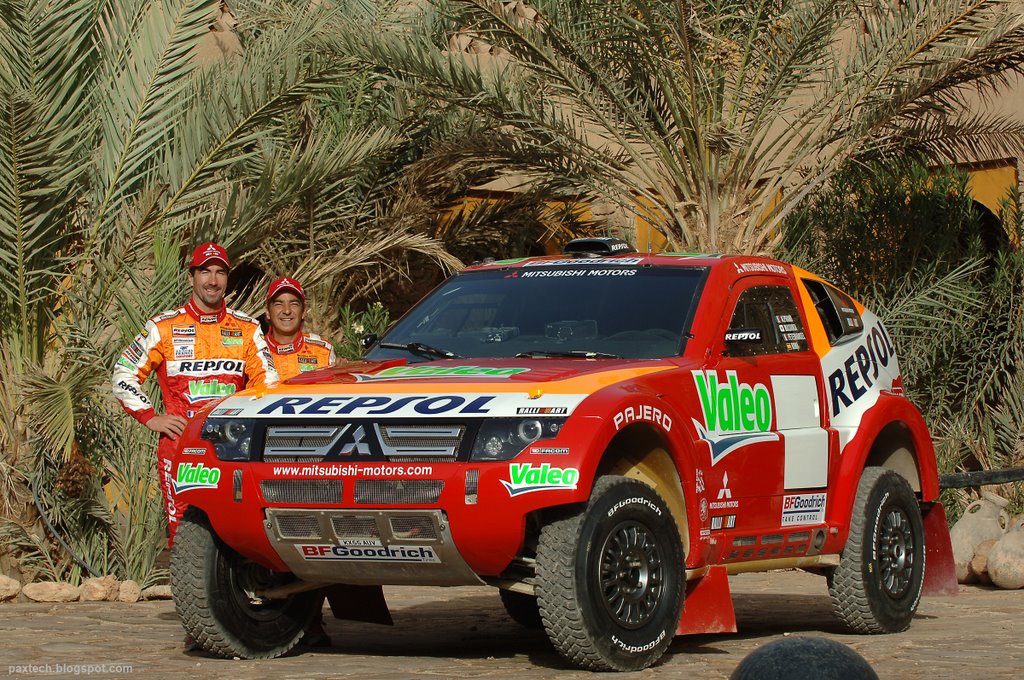
Team Repsol Mitsubishi Ralliart began the defence of its Dakar Rally title by holding a cautious seventh, eighth, 10th and 17th positions after the tricky opening 117km special stage of the event between Lisbon and Portimao in Portugal on Saturday.


A crowd of around 1,500 people gathered outside the Belém Cultural Centre on Saturday morning to witness the start of the 29th running of the world’s most famous off-road event. The bumper bike entry managed to leave the start in relatively clear conditions, but fog from the Tagus river enveloped competitors soon afterwards and the majority of the leading cars left in foggy conditions and poor visibility.


Joan ’Nani’ Roma/Lucas Cruz

Joan ’Nani’ Roma, making his return to active competition with new co-driver Lucas Cruz, was the leading Mitsubishi driver after the opening stage in a troublefree seventh position, albeit 4m 53s behind the early leaders Carlos Sousa and Andreas Schulz.


Stéphane Peterhansel/Jean-Paul Cottret

Twice former winners Stéphane Peterhansel and Jean-Paul Cottret recorded a time 24 seconds slower than their team mates in a second Mitsubishi Pajero/Montero Evolution and held eighth place, while Japan’s Hiroshi Masuoka and Frenchman Pascal Maimon were classified in 10th overall.


Hiroshi Masouka/Pascal Maimon

"I had a puncture," said Masuoka. "But the stage was very difficult. It was tight, twisty and there were a lot of tree stumps where it was easy to damage the car. But it is still very early. There is a long way to go."


Luc Alphand/Gilles Picard

Defending champions Luc Alphand and Gilles Picard were the first crew into the opening stage and that was always going to be a disadvantage for the French duo. But their cause was not helped when they collected a puncture and were not able to stop and make a change.

"I knew that the pace would be high on the rally this year," admitted 17th-placed Alphand. "So we need to keep in touch without taking any risks. I want to make a proper race and that means being very clean through the next stage in Europe. The margin of error is getting smaller all the time as the pace increases. We saw last year there were accidents for me, for Carlos and for ’Nani’ on rallies, so this must be taken into account."

MMSP’s Managing and Sporting Director Dominique Serieys was a little disappointed with the result of the day and openly congratulated his rivals on their performance. "Maybe we underestimated the pace at the front of the field today," said Serieys. "’Nani’ is nearly five minutes behind the leader and that is something we need to address.

"We will up the pace a little, because we do not want to leave too much work for Africa and Mauritania in particular. I take my hat off to Volkswagen today. They did a good job and it just emphasises that we will have quite a fight on our hands to retain the title. One big positive is that there were no mechanical problems with any of our cars and this is a major bonus."

"The impact of the recent route changes will not be too strong," added Serieys. "The ASO made a good decision after discussions with the French Ministry of Foreign Affairs. We must not just consider the professional teams, but also the amateur teams at the back of the field. These changes came with Mitsubishi’s total approval. We will slightly change our strategy after this, but the tough stages will not necessarily be in this area. We must also remember that no one has ever won the Dakar on the first two or three stages. You can just lose the Dakar."

CHINA’S LUI BIN HOLDS 73rd PLACE


Lui Bin/Serge Henninot

Ralliart Inc. entered two cars in the event in conjunction with MMC and the Tibau Team, which was also running six drivers on its own.


Lui Bin/Serge Henninot

The day’s stage marked the first taste of competition for China’s Lui Bin, partnered by the experienced French co-driver Serge Henninot for the first time with support from Mitsubishi China for his Mitsubishi Pajero/Montero. Bin has yet to tackle a traditional African special stage, but he was in good form through the tricky opening section in Portugal and held 73rd in the unofficial rankings at 16.00 hrs.


Mana Pornsiriched/Jean Brucy


Mana Pornsiriched/Jean Brucy

Thai team mate Mana Pornsiriched and French co-driver Jean Brucy were classified 90th overall after the opening timed special stage in their Mitsubishi L200 Triton.

Tomorrow (Sunday) is the second and final European stage of the Dakar Rally, with crews set to tackle an extended 67km WRC-style special stage after a 15km run out from the start in Portimao. The route then heads east towards the Spanish frontier and a 463km liaison takes teams to Malaga and pre-boarding formalities before the sea crossing to Africa on Sunday night.

-MMSP

Current Overall Standings after Leg 1
07 Dakar Leg 1 Results

Friday, January 5, 2007

MItsubishi Ralliart to support a Two-Car Team

Mitsubishi Motors Corporation and Ralliart Inc. are set to support Team Mitsubishi Ralliart China and Team Mitsubishi Ralliart Thailand in the 2007 Dakar Rally, which starts in Lisbon on Saturday, January 6th, 2007.

The event is officially known as the 2007 Euromilhoes Dakar and is better known as the Paris-Dakar Rally. The punishing African off-road challenge will finish in Dakar on Sunday, January 21st, 2007.

Team Mitsubishi Ralliart China are attempting the grueling African event for the fourth time and the team have the backing of the FASC (Federation Automobile Sports of The People's Republic of China). They will enter a Mitsubishi Pajero/Montero in the competitive diesel engine category. In addition, Team Mitsubishi Ralliart Thailand, with support from Mitsubishi Thailand, will enter a Mitsubishi Racing Triton Evolution.


Team Mitsubishi Ralliart Thailand

Mitsubishi Motors and Ralliart Inc. have used their joint experience in Cross-Country rallying to organize the teams, build the vehicles, enforce training for the crew and provide and set up a service operation during the event.

Advanced training has been provided by the 1998 Dakar winner, Frenchman Jean-Pierre Fontenay. The Thailand & China team underwent rigorous training in the deserts of Inner Mongolia in China back in August and also benefited from practice runs in France in November. Both driver and co-driver also received mechanical training in France.


Team Mitsubishi Ralliart China

Team Mitsubishi Ralliart China is a Chinese team supervised by Lee Chunway, current vice-chairman of the FASC. The team first attempted the Dakar Rally in 2004 and finished 47th overall. The 2007 Dakar Rally marks the team's fourth attempt.

In preparation for the 2007 Dakar Rally, driver Liu Bin has been active in local events, such as the China Rally Championship and the China Cross-Country Rally Championship. Frenchman Serge Henninot will act as co-driver for the fourth successive season.

Henninot has considerable experience on the famed Dakar Rally event. The team is prepared to go the whole distance and has the aim of gradually climbing the overall classification.

A turbocharged diesel engine powers the Mitsubishi Pajero/Montero, which is entered under Super-Production (T1) specifications. The 2007 Dakar Rally will also mark the 25th participation of Mitsubishi Motors in the classic African event. The Japanese cross-country vehicle was born from a quarter of a century of experience and advances in automotive technology.

Monday, December 18, 2006

4th Generation Shogun (Pajero/Montero) for UK in March 2007

FOURTH GENERATION MITSUBISHI SHOGUN REVEALED

·Arrives in the UK 1st March 2007
·Evolutionary fourth generation Shogun retains its authentic terrain-busting characteristics for drivers wanting reliable and cost-effective go-anywhere ability
·Carry-over pricing despite significant upgrades in luxury features and safety
·Prices range from £22,949 to £34,999
·Powered by revised version of Mitsubishi’s 3.2-litre turbo diesel engine with common rail technology, and a choice of five-speed automatic or manual transmission.
·Seven-seater comfort available in the long-wheelbase Shogun with its innovative ‘Hide&Seat’ third row of seats
·Familiar Equippe, Warrior and Elegance line-up topped by luxury new Diamond flagship model
·6000 sales anticipated in first 12 months

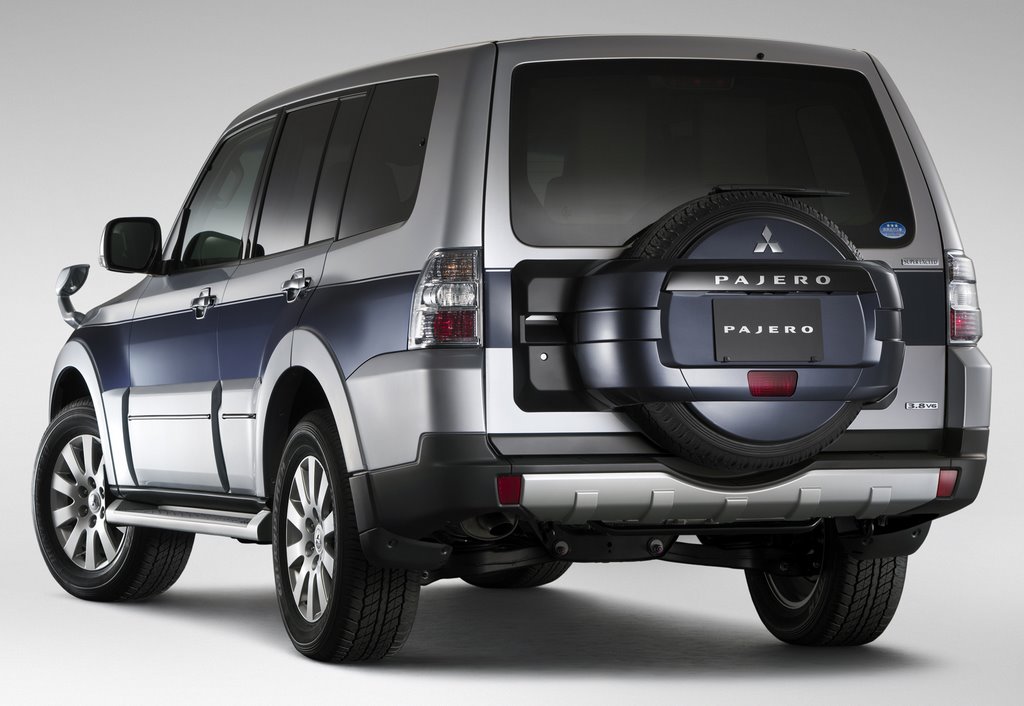
Mitsubishi Motors fourth generation Shogun off-roader, which arrives on 1st March 2007, is a progressive evolution that combines authentic four-wheel-drive go-anywhere ability with bold and muscular new styling, complemented by Euro IV-compliant turbo diesel power and the choice of either a three-door short or five-door long-wheelbase chassis.

Despite minimal carry over of parts, a mere 26%, the new Shogun is immediately distinguished by its bold new grille, short front overhang, upright windscreen, strong high flanks, flared wheelarches and rear-mounted spare wheel – all key Shogun style cues that underline its tough, authentic, off-road ability.

As well as option of three or five doors, Shogun buyers will have the choice of a four model line-up – the familiar Equippe, Warrior and Elegance models as well as the new luxury Diamond range topper. As always, the Shogun comes packed with an array of standard safety and luxury equipment. All models come with ASTC active stability and traction control, alarm and keyless entry, climate control, twin front, side and curtain airbags, ABS anti-lock brakes backed up by EBD electronic brakeforce distribution and 17inch alloy wheels fitted as standard.

The list of standard features may be much longer but pricing for the new Shogun remains unchanged, emphasising Mitsubishi Motors value-for-money policy. Prices range from £22,949 for the three-door Equippe model through to £34,999 for the five-door Diamond model.

The new Mitsubishi Shogun draws on 70 years of off-road heritage that includes an unbeaten 11 Paris-Dakar rally wins. Its monocoque chassis with built-in ladder frame offers both peerless off-road ability and responsive on-road driving dynamics. Using a higher number of key spot-welds, additional structural adhesives and a greater use of high-tensile steel has significantly stiffened the chassis, while the level of anti-corrosive zinc plating is significantly higher than before. The result is a quieter, safer and more dynamic basis for the double wishbone front and multi-link rear suspension, now fitted with uprated springs and dampers.

Key to the Shogun’s off-road ability is its AWC all-wheel control system, complemented by Mitsubishi’s Super Select 4 II transfer case. Using a centre differential lock, that splits torque 33:67 front to rear, Super Select 4 II offers four driving modes – 2H rear-wheel drive, 4H full time four-wheel drive, 4HLc which locks up the centre differential, and 4LLC for extreme low ratio off-road work.

Beneath the Shogun’s bonnet sits a heavily revised version of Mitsubishi’s acclaimed 3.2-litre four-cylinder turbo diesel engine. Now featuring an advanced high-pressure common rail fuel injection system, the 3200cc unit produces 168bhp at 3800rpm and a hefty 373Nm of torque at 2000rpm when hooked up to Mitsubishi Motors INVECS-II automatic gearbox with sequential ‘Sports Mode’. In models fitted with the Shogun’s revised five-speed manual transmission, outputs are 158bhp at 3800rpm and 381Nm at 2000rpm. As well as being more powerful and more economical, the engine is also significantly quieter and more refined, with noise levels reduced by an average of four decibels across the rev-range.

The lighter short-wheelbase Shogun comes with 290mm front and 300mm rear disc brakes gripped by two-pot calipers, while the heavier long-wheelbase gets larger 332mm discs at the front and rear, with four-pot caliper up front and two-pot at the rear. This braking system is enhanced by ASTC active stability and traction control that uses variable torque distribution and individual wheel braking to enhance traction, stability and safety.

The Shogun’s interior – from its A-pillar grab-handles to its lofty driving position – reflects its rugged authentic all-season ability. The all-new cabin architecture features a contemporary integrated centre console that houses a Multi-Information Center Display for the climate and audio controls. Particular attention has been paid to creating a robust feeling within the cabin, with an intuitive layout and easily understood graphics and instruments.

At 4385mm long, 1875mm wide and 1880mm high, the short-wheelbase three-door Shogun combines dynamic, athletic styling with a spacious and comfortable cabin. The long-wheelbase version (4900mm long, 1875mm wide and 1990mm high) features Mitsubishi Motors innovative ‘Hide&Seat’ system that quickly and easily converts the Shogun from a five to a seven-seater. When additional seating is required, two seats quickly and easily fold out from the boot floor to create a third row of seats, complete with integrated head rests.

Since its debut in 1982, Mitsubishi has produced 2.5million Shogun models, with 92,954 sold in the UK. The Mitsubishi Shogun is a car that inspires exceptional brand loyalty, with seven in ten customers retaining a Shogun. In its first full year of sales, Mitsubishi Motors expects to sell 6000 Shogun models, with the long-wheelbase version accounting for over tow thirds of sales. Some 65% of total sales will be the high-end specification Elegance and Diamond models.

Gallery:


1280x1024 Wallpaper

-Mitsubishi UK

Wednesday, October 18, 2006

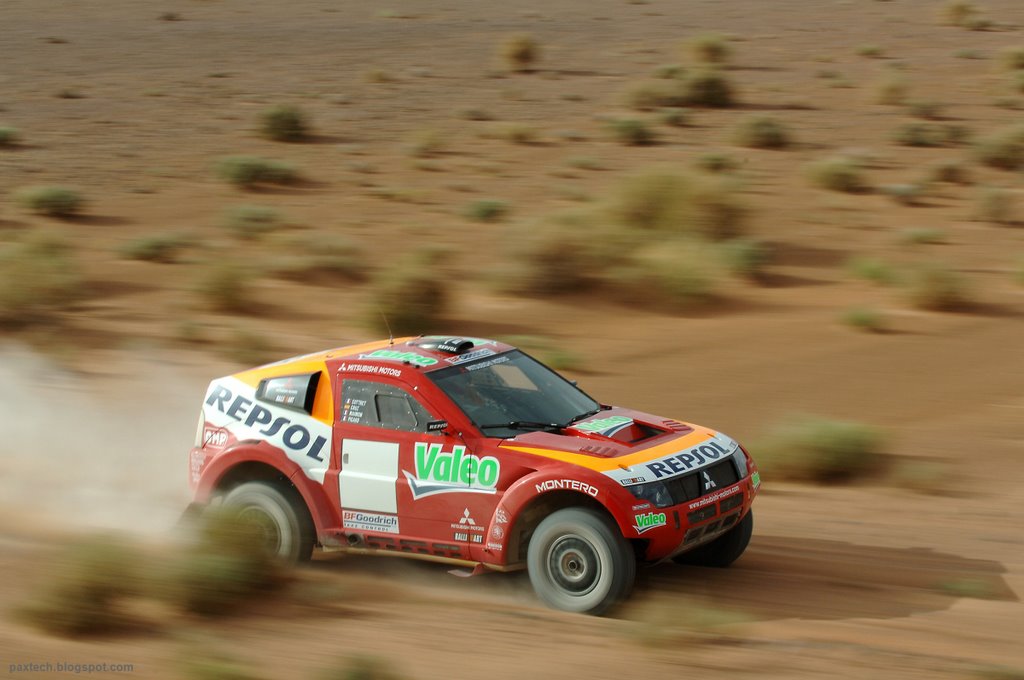
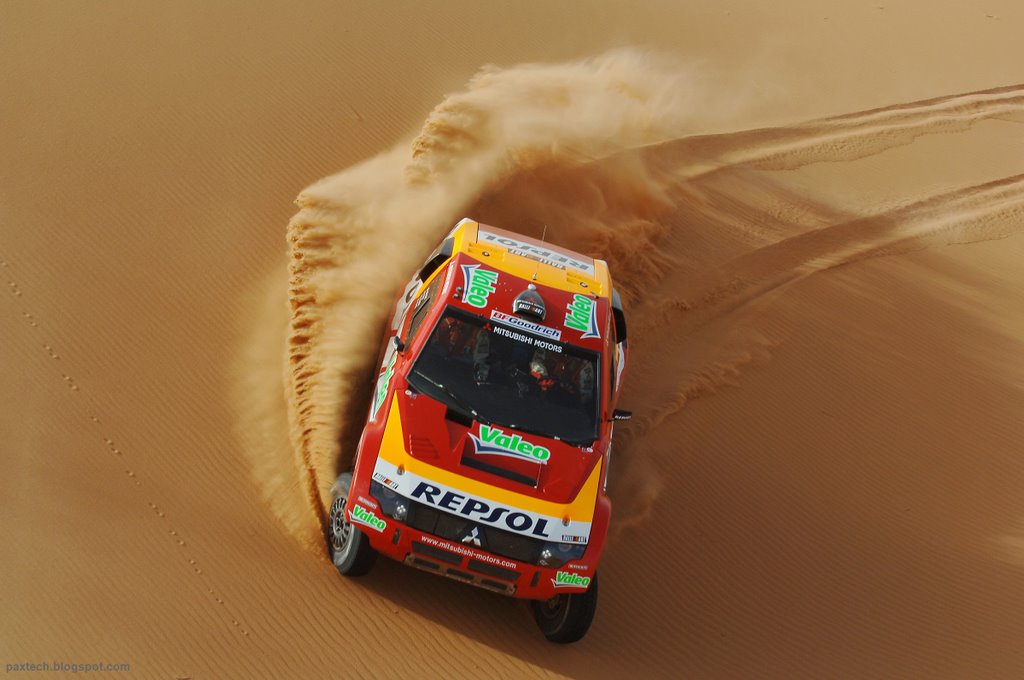
Introducing the Mitsubishi Pajero Evolution MPR13 for the Dakar 2007

MITSUBISHI DEVELOPS NEW PAJERO* EVOLUTION FOR 2007 DAKAR RALLY

Mitsubishi Motors Corporation (MMC) and MMSP, the company's motorsport subsidiary, have jointly developed a new purpose-built vehicle - the revised Mitsubishi Pajero* Evolution.

The new model - codenamed the MPR13 - complies with FIA Super Production regulations and has been developed in unison with the launch of the new generation Sport Utility Vehicle (SUV) version of the road-going Mitsubishi Pajero*.

The MPR13 features a wide variety of modifications, including a newly-designed integral frame structure. Prior to the 2007 Dakar Rally, which starts in Lisbon on January 5th, the new car was put through extensive tests in Morocco, one of the countries in the route for January's rally.

The new Pajero* Evolution will also participate in the UAE Desert Challenge, the final round of the FIA Cross-Country Rally World Cup, at the start of November, as a crucial desert shakedown prior to the Dakar Rally.

The first generation Pajero* made its debut in the market back in 1982. Mitsubishi began competing in the Dakar Rally the following season, four years after the event was created. Since then the company has applied knowledge gained from competing in the Dakar Rally and general Cross-Country rally competition to boost and upgrade reliability, durability and dynamics of its road-going models.

The fourth generation model of the all-round SUV will be launched in October 2006. This coincides with the 25th anniversary of the vehicle's cumulative production total exceeding the 2.5 million mark. Participation in the 2007 Dakar Rally will be the 25th year that the car has taken part in the grueling African event. The new Pajero* Evolution or MPR13 is a result of the close collaboration between Okazaki R&D and Design in Japan and MMSP SAS of Pont de Vaux in France.

The new vehicle offers additional advantages in weight reduction and improved rigidity through the replacement of the conventional subframe with the newly-designed integral multi-tubular frame. Dynamic performance has also been upgraded by adjusting the location of heavy items such as the fuel tank and spare wheel to a lower and more central position. The lowered and centred mass, when used in conjunction with a modified suspension system, makes a significant contribution to enhanced manoeuvrability and dynamic stability.

Since the fuel tank is now placed beneath the driver's seat, the lower edges of the front door openings move downwards. To cater for the change in the configuration, the new Pajero* Evolution features specific gull-wing doors.

Both at the front and rear of the car, Mitsubishi's new cross-country vehicle bears a striking resemblance to the company's fourth generation Pajero* road model. It strikes a unique blend of the build quality of the road car and the functional beauty of the competition car. The ressemblance between MPR 13 and the fourth generation Pajero* was created on purpose to reinforce the link between the racing Pajero and the production Pajero*: a first since 2002 and a marketing plus.

Recent tests confirmed that the modified engine is more responsive, courtesy of weight reduction in the valve gear train, as well as improvements to the fuel injection system. The effects of the improvements go further still: refined aerodynamics allow the engine to rev higher and more freely.

During the recent Morocco test, there were no teething problems with the new MPR13. Additional development and refinements are underway. The target is simple - to win the Dakar Rally in January for the seventh successive year and record the company's 12th outright success in the world's most famous rally.

*Montero in Spain/Shogun in the UK

Gallery (click for high resolution image):

The Repsol Mitsubishi Team for 2007


Luc Alphand and Gilles Picard


Hiroshi Masouka and Pascal Maimon


Pajero Evolution MPR13


Pajero Evolution MPR13


Pajero Evolution MPR13


Pajero Evolution MPR13

Pajero Evolution MPR13


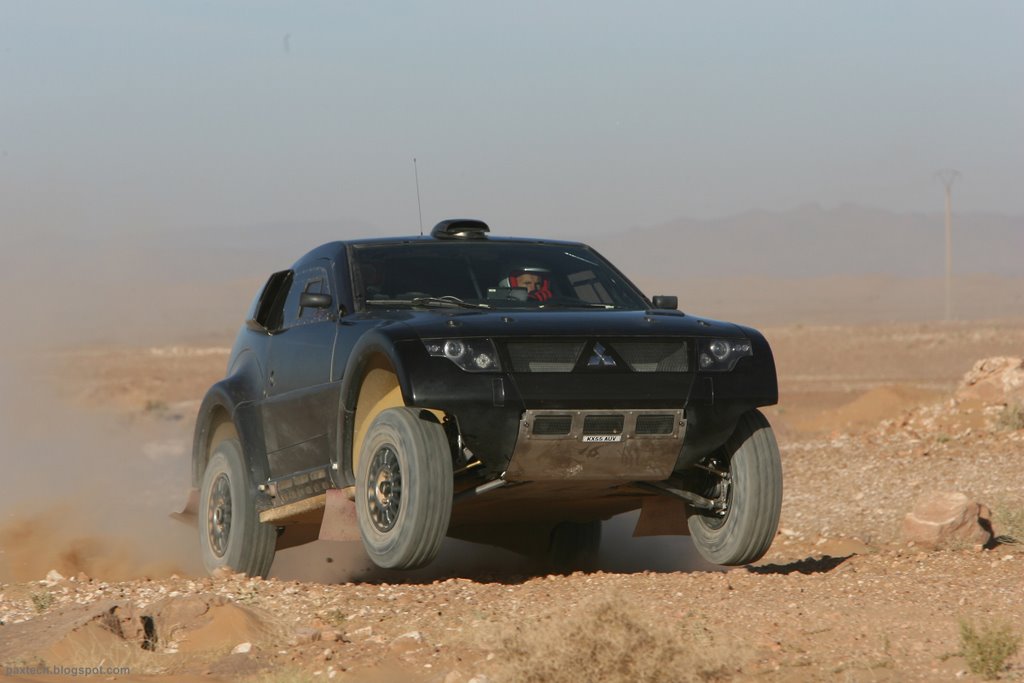
Pajero Evolution MPR13 during test in Morocco


Pajero Evolution MPR13 during test in Morocco
photos and story: MMSP

Wednesday, October 4, 2006

Mitsubishi Motors launches new Pajero (Japan)

- "Global-standard all-round SUV" -

Tokyo, 4 October 2006 — Mitsubishi Motors Corporation (MMC) today announced the Japanese market launch of the fully redesigned Pajero*1 SUV at affiliated dealerships throughout Japan on October 4. The company has sold some 2.5 million Pajeros in over 170 countries and regions since its introduction in 1982. Pajero has established a rock-firm reputation among customers as an all-round sport-utility vehicle that delivers go-anywhere off-road performance with the high-speed cruising performance and comfort of a sedan. Tax inclusive prices for short body models range from 2,415,000 yen to 3,486,000 yen and for long body models from 2,625,000 yen to 4,368,000 yen.

During development the 4th-generation Pajero underwent a full range of testing programs subjecting it to the harshest conditions imaginable. These included simulated compatibility testing at 2,500 m in the European Alps and minus 40-degree temperatures in Northern Europe, as well as actual off-road driving in African desert and Australian outback conditions. Enhancing its off-road capabilities and durability further, the new Pajero also benefits from technologies and know-how fed back from the Dakar Rally, the most grueling endurance rally in the world. The new Pajero retains the all-round independent suspension and Super Select 4WD-II (SS4-II) driveline introduced in the 3rd-generation model to give it unmatched go-anywhere capabilities over all surfaces. New technologies distinguishing the new model include an upgraded Active Stability & Traction Control (ASTC) system that can accommodate the installation of a new rear differential lock, a weight-reducing aluminum engine hood, and stiffer body joins and use of more plated steel sheet for improved durability and reliability. A new sound system and classy uptown interior also contribute to making the new Pajero a premium-value global-standard all-round SUV.

The new Pajero also brings significant improvements in safety and environmental performance. Dual-stage SRS airbags for driver and front passenger, side-impact and curtain airbags and other new passive safety measures earn the new Pajero the equivalent of a 6-star JNCAP rating in in-house testing. In terms of environmental performance all models achieve 3-star emission ratings with levels that are 50% below the Japanese 2005 Emission Standard requirements. The new Pajero also meets in advance the standards laid down in JAMA's Voluntary Vehicle Interior VOC Reduction Initiative for new cars introduced in and after April 2007 and levels of hexavalent chromium, lead, mercury and other environment-loading substances have also been substantially reduced. The new Pajero boasts significantly better build and finish quality with the introduction of Mitsubishi's In-stage Quality Creation (ISQC) system on the assembly line.
*1 Montero in Spain / Shogun in the UK.

1. Product features
(1) Lineup
- The new Pajero is offered in 7-seater long and 5-seater short body types. The long body comes in a total of five trim levels: three directed at those seeking a more uptown and classier presentation - SUPER EXCEED, EXCEED-X and EXCEED - and two aimed at those with more active lifestyles - ZR-S and ZR. The more nimble and athletic-looking short body is offered in VR-II and VR-I trim levels. To accommodate the wide range of user needs and requirements, EXCEED, ZR-S, ZR and VR-I trim levels are offered with an affordable Basic Package specification that excludes high-end equipment and accessory items.

(2) Design
- The new Pajero retains its trademark design taste of previous generations with styling cued by powerful straight lines that clearly hint at its off-road performance capabilities and identify it as an all-round SUV. The front visage takes the eyes of a wildcat (from which the Pajero name is derived) as its motif and is further distinguished by headlights with swept up undersides for better obstacle avoidance.
- The large door mirrors house an indicator repeater and approach lamps that light up the area around the front doors at night. The new design mirror also feature a deflector on the underside of the housing that helps to keep rain flowing round onto the door window.
- The new Pajero retains the tailgate backpack-style spare tire garnish that allows the driver to readily check the condition of the tire. Housing the license plate, rear-view camera and rear fog lamps the garnish is centrally located to make the rear combination lamps more clearly visible to following drivers. The spare tire mounting has been moved down 50 mm to lower the center of gravity and to improve rearview visibility.
- EXCEED series use an elegant and refined beige interior color scheme, while a sportier black scheme is available on all grades.
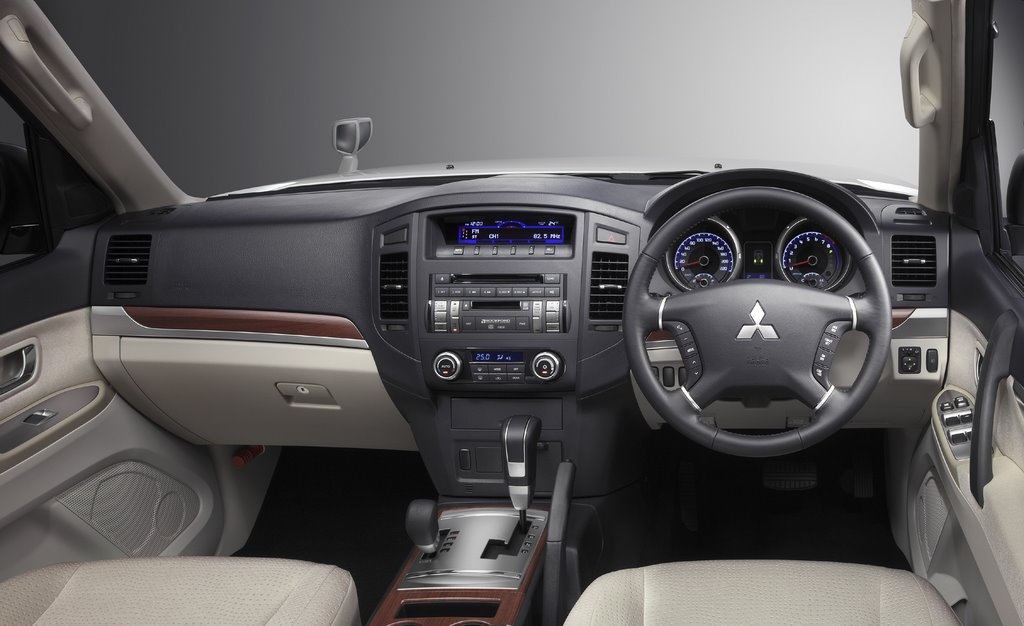
- The dashboard is composed of clean lines with a powerfully shaped cross section. The instrumentation layout is clearly zoned by function, with the Center Information Display that shows vehicle operating status information at the top, the audio control panel below that and the climate control panel at the bottom. Frequently used controls have been made larger for better visual location and to facilitate more accurate operation.
- Long body models are offered in four 3-way 2-tone colors and five monotone colors on for EXCEED series, three Special 2-tone colors for ZR-S, and three monotone colors for ZR. Short body models are offered in five Special 2-tone colors for VR-II and five monotone colors for VR-I. [White Pearl available at extra 31,500 yen (tax included). 3-way 2-tone available at extra 42,000 yen (tax included).]

(3) All-terrain performance
- The new Pajero retains the generous ramp angles that define it as a true all-round SUV and allow it to negotiate all types of surface: an approach angle of 36.6-degrees (36.7-degrees on the short body); breakover angle of 22.5-degrees (25.2-degrees) and departure angle of 25-degrees (34.8-degrees).
- The new Pajero is powered by two engines that feature detail improvements to realize a happy marriage between high output and environmental performance. The SUPER EXCEED, EXCEED-X and VR-II use the 3.8-liter V6 24-valve SOHC MIVEC*2 unit. The EXCEED, ZR-S, ZR and VR-I are powered by a 3.0-liter V6 24-valve SOHC with ECI-Multi fuel injection engine.

*2 Mitsubishi Innovative Valve timing & lift Electronic Control system
- The 3.8-liter V6 24-valve SOHC MIVEC engine generates flat and gutsy torque across the full speed range as well as category-topping power output thanks to the adoption of technology that uses two different camshaft profiles to vary intake valve lift and timing for low and for mid-high engine speeds and a dual-stage intake manifold to deliver three modes of engine performance: low, mid- and high speed. The new Pajero uses a clamshell design stainless plate manifold which has a lower thermal capacity and therefore allows the catalytic converter immediately downstream to activate more quickly and, together with improvements in the catalyst itself and a more efficient exhaust system layout, brings a substantial improvement in emissions performance.
- The 3.0-liter V6 24-valve SOHC ECI-Multi engine uses an electronically controlled throttle and a stainless plate exhaust manifold to improve fuel economy and emissions performance.
- The new Pajero mates the 3.8-liter V6 24-valve SOHC MIVEC engines with INVECS-II 5-speed automatic transmissions and the 3.0-liter V6 24-valve SOHC ECI-Multi engines with INVECS-II 4-speed automatic transmissions respectively. The use of a new automatic transmission fluid warmer improves fuel efficiency. Both transmissions have undergone fine tuning to match shift scheduling to the higher engine power outputs resulting in the more effective use of power and better fuel economy.
- For the first time the new Pajero uses an automatic transmission fluid (ATF) warmer that shortens the ATF warm-up period to allow earlier torque converter lockup after a cold start and reduce friction losses.
- The new Pajero employs the Super Select 4WD II four-wheel driveline from the previous model which offers four drive modes that deliver optimum traction for reassuring stability and outstanding handling characteristics over all surfaces. SS4-II allows the driver to lock the center differential for maximum drive torque over poor surfaces or he can allow the viscous coupling type center differential to automatically tailor its basic 33:67 F-R torque split to suit different surfaces and conditions.
2. 2H mode
The 2H mode minimizes road friction losses to allow maximum fuel economy and is also the ideal mode for urban driving in fine weather.
3. 4H mode
The standard operating mode for SS4 II, the 4H mode caters to a wide range of conditions: driving around town, on expressways or winding country roads; and driving over packed snow, icy surfaces, flat dirt and other off-road conditions.
4. 4HLc mode
Selecting 4HLc locks the center differential so that drive is transmitted through all four wheels to deliver brawny performance when driving in soft snow, sand, dirt or other high-resistance conditions.
5. 4LLc mode
Locking the center differential and keeping the transmission in a low gear this mode is used to negotiate rocky terrain or swampy conditions where extra drive is required.
- Available on all models as a factory-fitted option is a rear differential lock that eliminates the differential between the rear wheels. Working hand-in-hand with the front/rear center differential lockup this new feature helps the driver extract his vehicle when bogged down in soft surfaces. (Not available on Basic Packages.)
- Refining improvements have been made to Mitsubishi's acclaimed ASTC system that regulates brake force and drive torque on an individual wheel basis to deliver outstanding handling and vehicle stability as well as go-anywhere all-terrain capability. (Standard on SUPER EXCEED, EXCEED-X and VR-II. Factory-fitted option available on all other grades. Not available on Basic Packages.)
- The ASTC system is now capable of detecting the operating status of the rear differential lock. This allows both systems to be installed at the same time and thereby extend Pajero's off-road capabilities further still.

(4) Reliability and durability
- The new Pajero retains the independent double wishbone front and multi-link rear suspension configuration of its predecessor. Improvements to spring, shock absorber, stabilizers and rubber bushing characteristics have improved cornering stability as well as making for a flatter and more comfortable ride.
- SUPER EXCEED and EXCEED-X use larger 17-inch disc brakes with 4-pot opposing calipers that deliver better stopping power and higher resistance to fade.
- The new Pajero rides on two aggressively styled designs of 18-inch alloy road wheel: SUPER EXCEED using a 10-spoke luxury-finish wheel and the EXCEED-X and VR-II using a sportier 6-spoke wheel. The wheels are shod with 265/60R18 tires.
- Pajero's built-in frame monocoque body features further improvements in reliability and durability. Measures taken to boost body stiffness include more spot welds, a stiffer cowl top, switching from 270 MPa grade to 440 MPa grade high tensile strength steel, and the strategic use of structural adhesives.
- Switching to aluminum has lowered the weight of the engine hood by approximately 9 kg. As well as reducing the body weight and improving the front/rear weight distribution, this also makes opening and closing the hood a much easier task.

(5) Crashworthiness and environmental performance
- The new Pajero employs the following passive safety measures to significantly reduce occupant injury in a crash: dual-stage SRS airbags for driver and front passenger, new design front seatbelts with pretensioner and force limiter that provides more secure and kinder location, and side-impact and curtain airbags. (Standard on SUPER EXCEED. Factory fitted option on all other grades. Not available on Basic Packages.)
- Pajero provides the equivalent of a maximum six-star JNCAP safety rating in-house testing after the introduction of further measures designed to increase the absorption of impact energy and mitigate occupant injuries. These measures cover the rearward displacement of the powertrain, as well as the construction of the steering column and the brake pedal.
- The new Pajero reduces transmission of ultra-violet and infra-red radiation into the cabin using UV- and IR-cutting solar control glass in the windshield and front door glass as standard. The use of privacy glass in the rear door, quarter light and tailgate windows reduces UV and IV radiation transmission into the cabin from all sides of the vehicle.
- All new Pajero models come standard with an odor-removing Clean Air Filter for the air conditioner and deodorizing head lining to provide a clean and comfortable cabin environment by reducing and inhibiting volatile organic compound (VOC) levels as well as everyday and cigarette smells.
- The new Pajero goes further in providing a comfortable and pleasant cabin interior by meeting in advance the standards laid down in JAMA's Voluntary Vehicle Interior VOC Reduction Initiative for new cars introduced in and after April 2007. Levels of hexavalent chromium, lead, mercury and other environment-loading substances have also been substantially reduced.
- All models earn 3-star rating for emissions that are 50% lower than required by the Japanese 2005 Emissions Standards.

(6) Entertainment / Utility
- Located at the top and in the middle of the dashboard is the Center Information Display that presents fuel economy, speed and other vehicle operating status information, as well as current altitude, atmospheric pressure and exterior temperature. The display also shows in-car entertainment system status, a clock, and a calendar. (Standard on EXCEED models and VR-II. Factory-fitted option on other grades. Not available on Basic Packages.).
- Long body models are fitted with a third row of seats that fold away under the floor when not required, a feature which proved popular on the previous Pajero. The head restraints also stow neatly under the floor.
- Built into the tailgate is a generous two-tier storage box: the top section provides free space for stowing a first-aid kit or tissue box while the bottom section holds the emergency triangle.
- The new Pajero sports a new Rockford Acoustic Design Premium Sound SystemTM comprising a 860 Watt amplifier, 12 speakers, a digital signal processor (DSP) and a 5.1 channel theater surround system that creates a soundstage with soulful heavy bass and a high acoustic energy flow. This system is standard on EXCEED models and is a factory-fitted option on ZR-S and ZR but not available on Basic Packages.
- Standard on the SUPER EXCEED and available as a factory-fitted option on all other trim levels is Mitsubishi's on-board navigation system that houses a 30GB hard disk drive with a 7-inch LCD display and uses dedicated LSI circuitry to provide ultra-fast search and route finding capabilities. (Not available on Basic Packages.)
- Available on long body models is a 9-inch LCD monitor with integral DVD, CD and video entertainment system housed in the roof of the rear compartment. (Not available on Basic Packages.) The system works with the Rockford Acoustic Design Premium Sound SystemTM to bring audio and visual entertainment from a variety of sources to rear passengers in full 5.1-channel home theater surround sound.

Gallery: (click on image to enlarge)


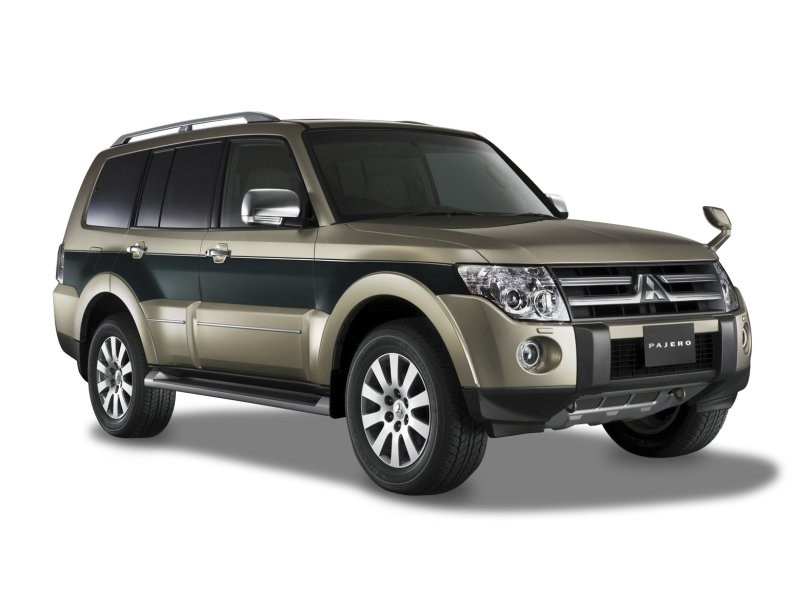
Pajero (Long body SUPER EXCEED)


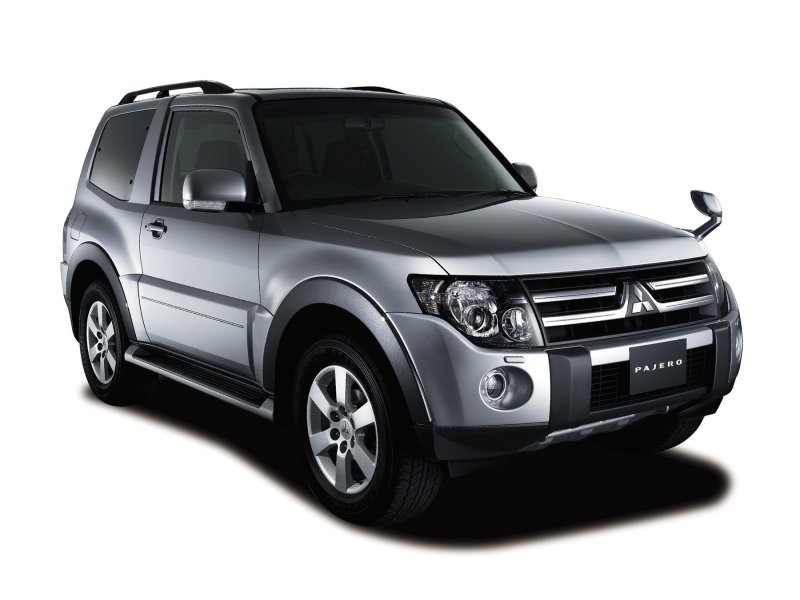
Pajero (Short body VR-II)


- Mitsubibishi Motors Corporation

Friday, September 29, 2006

Mitsubishi Outlander Concept and 2007 Pajero (Europe) unveiled at Paris Motorshow

Mitsubishi Motors lineup at Paris Motor Show

— World Premiere for "Global Standard All-round SUV" New Pajero —

Tokyo, September 28, 2006 — Mitsubishi Motors Corporation today gave the new "global standard all-round SUV" Pajero*1 its world debut at Le Mondial de l' Automobile 2006 (Paris Motor Show 2006) being held in Halls 1-8 of the Paris Expo Porte de Versailles from September 28 (September 30 for the general public) through October 15. Also on display are the Outlander Concept, based on the Japanese market Outlander on-road SUV with styling and powertrain tailored to the European market, and debuting alongside the new Pajero is the new Pajero Evolution which the company plans to enter in the 2007 Dakar Rally. The company is showing a total of 13 vehicles (18 when the show opens to the general public).

Features distinguishing the new Pajero (European market specification) include: a similar all-round SUV specification (approach and other ramp angles, ground clearance) as its predecessor; the Super Select 4WD II driveline developed to Mitsubishi Motors' All Wheel Control (AWC) concept to deliver outstanding go-anywhere all-terrain performance; Active Traction & Stability Control (ASTC) system that has been upgraded to allow the installation of and to work with a new rear differential lock; a classy uptown interior design; and a Rockford Acoustic Design Premium Sound System™.

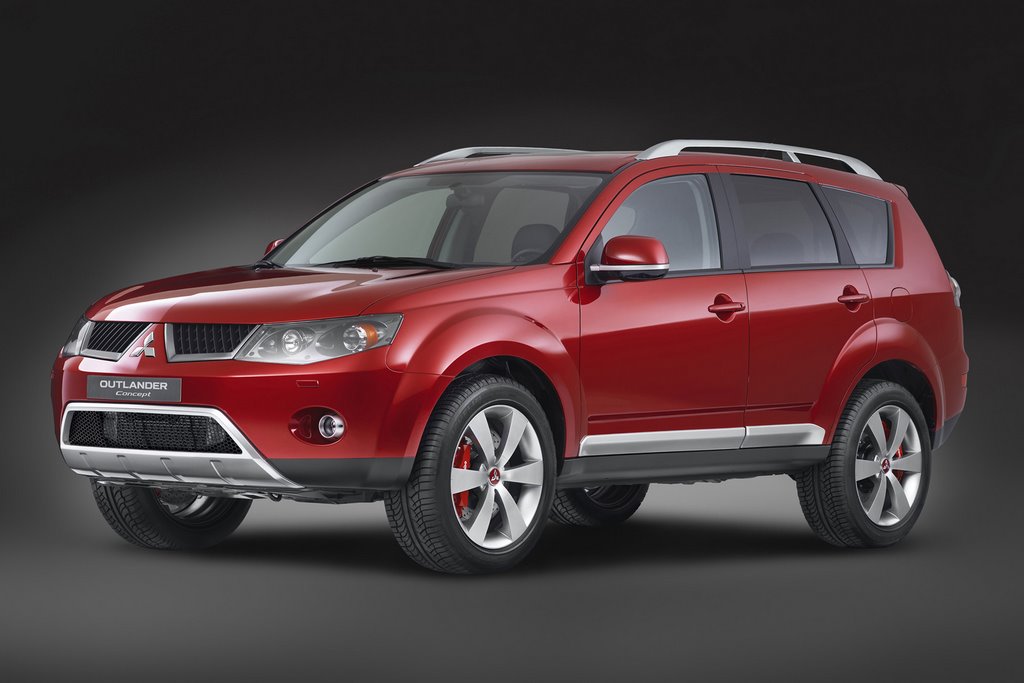
Outlander Concept is tailored to the European market through a number of changes to the Japan market model. It is powered by a Volkswagen 2.0-liter 16-valve DOHC direct-injection intercooler-turbocharger diesel engine that is mated to a 6-speed manual gearbox. In its styling Outlander Concept sports the Mt Fuji-style front grille that serves as one of the design identity elements for Mitsubishi brand models in Europe.

The Pajero Evolution rally machine has won the Dakar Rally four times in a row since its debut in the 2003 event. Now in its fifth year, the latest iteration features improvements to the suspension and driveline and, as on the new Pajero regular production model, features a redesigned front visage with the underside of the headlights swept up to serve as a motif for the eyes of a wildcat (from which the model derives its name).

At its press conference held on September 28 at the Paris Motor Show, the company introduced the four drivers expected to be representing Mitsubishi Motors in the 2007 Dakar Rally: Japanese ace pilot Hiroshi Masuoka, 2006 overall champion and former alpine ski champion Luc Alphand (France), overall champion two years running in 2004 and 2005 Stephane Peterhansel (France) and the young rising star Nani Roma (Spain).

*1: Montero in Spain / Shogun in the UK

1. Product features: New Pajero (European market specification)

* New Pajero is offered in 7-seater long and 5-seater short body types to accommodate diverse customer needs and lifestyles.
* Diesel models are powered by a 3.2-liter common-rail direct injection diesel engine that clears Euro-4 emissions regulations and is 15% quieter than its predecessor. (Maxima: A/T models 125kW(170 PS) / 373 Nm; M/T models 118kW(160 PS) / 381 Nm). Gasoline models are powered by a 3.8-liter V6 SOHC MIVEC engine that produces a maximum power output of 250 PS.
* The engines are mated to a 5-speed manual or to the INVECS-II 5-speed automatic transmission.
* The new Pajero uses the electronically-controlled Super Select 4WD-II driveline well-received on its predecessor for the superior off-road capabilities it delivers. The driver can select from four drive modes to match surface conditions and his driving preferences: the 2H 2WD mode and three 4WD modes (4H, 4HLc and 4LLc).
* The Active Traction & Stability Control (ATSC) system that regulates drive and braking force at each wheel on an individual basis to achieve superior handling stability and off-road performance has been upgraded to accommodate and work with a rear differential lock and extend the Pajero's capabilities over unmade surfaces.
* The new Pajero retains the independent double wishbone front and multi-link rear suspension configuration of its predecessor. The use of different spring constants and overall tuning of the suspension have reduced roll by 25% and more to improve handling and stability at all speeds and to make for a flatter and more comfortable ride.
* Long body models are fitted with a third row of seats that fold away under the floor when not required, a feature which proved popular on the previous Pajero. The head restraints also stow neatly under the floor.
* Built into the tailgate is a generous two-tier storage box: the top section provides free space for stowing a first-aid kit or tissue box while the bottom section holds the emergency triangle.
* The new Pajero sports a new Rockford Acoustic Design Premium Sound System™ comprising a 860 Watt amplifier, 12 speakers, a digital signal processor (DSP) and a 5.1 channel theater surround system that creates a soundstage with soulful heavy bass and a high acoustic energy flow.
* Mitsubishi's on-board navigation system houses a 30GB hard disk drive with a 7-inch LCD display and uses dedicated LSI circuitry to provide ultra-fast search and route finding capabilities.

2. Product features: Outlander Concept

* Outlander Concept sports an eye-catching Red Metallic body finish using silver accent coloring for the grille, roof rails and other elements to give a sporty dash to the overall appearance. The car rides on 20-inch 6-spoke alloy road wheels that give the lower body a tauter look as well as leaving no doubt as to Outlander Concept's on-road SUV personality.
* The powertrain mates the 2.0-liter 16-valve DOHC direct-injection diesel engine that produces maxima of 103 kW and 310 N-m and powers the Europe-market Grandis sedan to a 6-speed manual gearbox. Outlander Concept uses a diesel particulate filter (DPF) to meet Euro-4 emission standards.
* The driveline uses an electronically-controlled 4WD system developed from Mitsubishi Motors' All-Wheel Control (AWC) approach to deliver optimum drive torque for any particular situation or driving conditions and realize economy and go-anywhere performance that do justice to an all-round SUV.
* All-round independent suspension delivers responsive and accurate handling with a pliant ride. The aluminum engine hood, as used on the Lancer Evolution, reduces roll to improve road holding and increase stability.
* In-car entertainment is provided by the same 650 Watt 9-speaker Rockford Fosgate Premium Sound System™ acoustically tuned to the interior of, and well-received on, the Japan market Outlander.
* Outlander Concept uses the same split tailgate as the Japan market model with separate upper and lower sections that facilitate loading or unloading of different sizes and weights of luggage. It also uses the same fold-and-tumble second row seats and occasional-use third row seats, normally stowed under the floor, to produce a cavernous luggage compartment or to provide seating for seven as required.

Gallery (click image to enlarge):


Pajero (European market specification)


Outlander Concept (Show car)

-Mitsubishi Motors Corporation


Tuesday, September 12, 2006

Mitsubishi Pajero 2007 and Dakar Rally Pajero Evolution 2007 MPR13 revealed

World Premier for the next generation of Pajero (European market specification) at Paris Motor Show
— 2007 Dakar Rally Pajero Evolution also unveiled —

Tokyo, September 8, 2006 — Mitsubishi Motors Corporation (MMC) is to give the new global standard SUV Pajero* (European market specification) its world debut at Le Mondial de l'Automobile 2006 (Paris Motor Show 2006) to be held in Halls 1-8 of the Paris Expo porte de Versailles from September 28 (September 30 for the general public) through October 15.

More than 2.5 million Pajeros have been produced in the approximately 25 years since the first generation was launched in 1982. Sold in over 170 countries and regions today, Pajero has earned enormous popularity as a sport utility vehicle boasting outstanding durability and endurance that enable it to deliver safe, secure and comfortable performance over any and all types of road surface.
Debuting at the Paris Motor Show, this Pajero is the fourth in the series. The latest Pajero offers reliability forged in the crucible of grueling competition and use under the harshest conditions to be found on our planet. It retains the all-round SUV specifications of its predecessor, as seen in its approach angle, ground clearance and other all-terrain performance parameters. New features that distinguish the fourth-generation Pajero include:

* A powertrain applied a new 3.2-liter 4-cylinder diesel with common rail direct fuel injection or a 3.8-liter V6 MIVEC*1 gasoline unit.
* A 4WD system comprised of the sophisticated Super Select 4WD-II transfer case while both ASTC*2 and the rear differential lock available — developed on the bedrock of MMC's All-Wheel-Control (AWC) concept and delivering significant improvements in both off-road and tarmac performance.
* Tastefully designed dashboard and interior complemented by high-end equipment such as Rockford Acoustic Design Premium Sound System™ with a new 860W 12-speaker.

This latest Pajero is to be produced at Pajero Manufacturing Co., Ltd. in Gifu Prefecture, Japan. MMC plans to start shipments to Europe in September, followed by shipments in Japan and to Australia in October. Eventually the company plans to export the car to some 170 countries and regions in the Near & Middle East, Central and South America, and Asia and ASEAN regions.

Debuting alongside at the Paris Motor Show will be the similarly-styled next generation of Pajero Evolution which will be entered at the 2007 Dakar Rally.

MMC will hold its press & media briefing at 2:30 pm on Thursday September 28 at the Mitsubishi Motors stand in Hall 3.


* : Montero in Spain / Shogun in the UK
*1 : MIVEC, Mitsubishi Innovative Valve timing Electronic Control system
*2 : ASTC, Active Stability & Traction Control
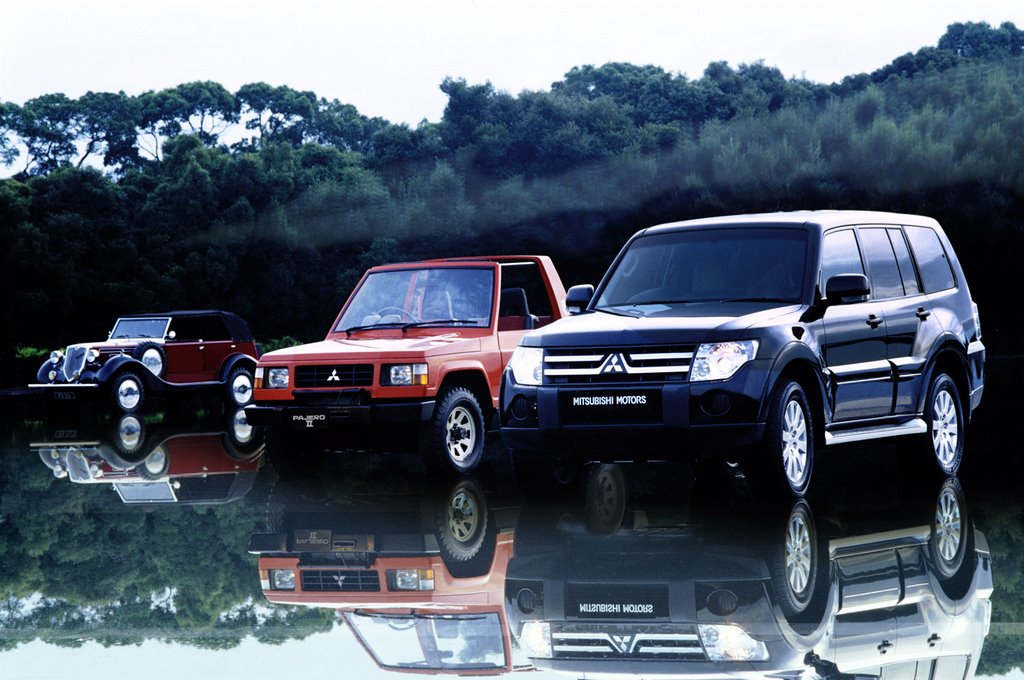
*3 : Pajero II, a concept car showcased in 23rd Tokyo Motor Show (1979)
*4 : PX-33, the first Japanese full-time 4WD passenger car (1936)


Image Gallery
(click for bigger image)

Mitsubishi Pajero 2007 5-doors


Mitsubishi Pajero 2007 3-doors


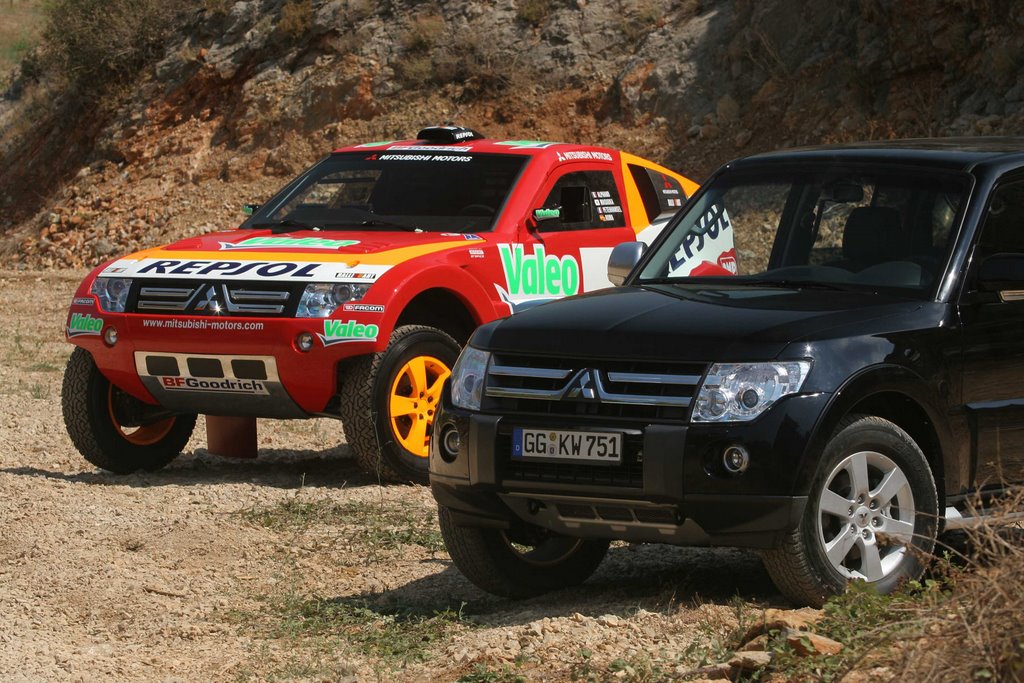
Mitsubishi Pajero Evolution 2007 Dakar Rally Edition [MPR13] (left) and Mitsubishi Pajero 2007 (right)


PX-33 (left), Pajero II concept (middle), and Pajero 2007 (right)