Showing posts with label Concept-cX. Show all posts

Saturday, October 31, 2009

Mitsubishi Compact Crossover

Mitsubishi Motors Corporation announces all-new Compact Crossover
- Game Changer -


Mitsubishi Motors Corporation (MMC) announces today the forthcoming introduction of its all-new on-road Compact Crossover, to be retailed first in Japan from February 2010 onwards.

Derived from the much-acclaimed 2007 Concept-cX show car, it is the latest development of MMC's mid-size global platform (“Project Global”).

This most important product will further support Mitsubishi Motors’ strategic shift from being an SUV-focused nameplate to a manufacturer of environment-friendly passenger cars & crossovers*, with a presence in the “authentic off-roader” segment** – itself pre-empting structural changes in market demand.


Wednesday, August 20, 2008

Mitsubishi Motors at the 2008 Moscow Motor Show [RU]

Mitsubishi Motors lineup at 2008 Moscow Motor Show
Tokyo, August 20, 2008— Mitsubishi Motors Corporation will unveil the new Pajero Sport*1 SUV at the Moscow Auto Salon 2008 (The Moscow Motor Show) to be held at the Crocus Expo in Moscow between August 26 and September 7 (opens to the public on August 29). Mitsubishi Motors will display a total of 15 models at the show. Joining the Pajero Sport on stand will be concept cars including the MITSUBISHI Concept-RA*2 sport coupe concept, the MITSUBISHI Concept-cX*3 compact SUV concept, and the MITSUBISHI Concept-ZT*4 which truly is the embodiment of Mitsubishi Motors' three key value of Driving Pleasure, Safety and Environmental Responsibility - as well as the fast-selling Lancer*5 sport sedan.

*1 Montero Sport in South America, Nativa in Latin America and Challenger in Australia.
*2 Road Alive
*3 Compact + X (cross) over
*4 Z (ultimate) + T (tourer)
*5 Galant Fortis in Japan


1. Pajero Sport (for Russian market)
Features that distinguish Pajero Sport include a new tough and durable "ladder frame" that provides a platform for outstanding performance under the most stringent off-road conditions and Mitsubishi's highly acclaimed Super Select 4WD system, based on the company's All Wheel Control philosophy. Inside, Pajero Sport achieves class-topping quietness while the comprehensive cabin appointments and practical innovations provide a reassuring and comfortable interior space.
(1) Design
Pajero Sport's exterior design was developed around the idea of "Cool & Hot" proportions. Its elegant styling makes it look perfectly at home around about town (cool) while its high SUV stance suggests how capably Pajero Sport can deal with all-terrain conditions (hot). The new design melds together a distinctive off-roader silhouette and dynamic lines crafted to create a form that projects a sense of speed. Front over-fenders accentuate the surface-hugging fat tires and macho rear blister fenders add a dash of muscular tenacity, serving to make the body look wider and impart a reassuring sense of safety.
Inside, Pajero Sport stays true to the "Cool & Hot" concept. A functional and intuitive center panel is centrally located in the dashboard for a sporty and in an expansive structure that adds to a sense of roominess. The use of two-tone coloring tied to the door trim contributes to creating a coherent interior space distinguished by its clean, unbroken surfaces. Features that serve to enhance levels of functionality and quality appearance include the use of soft-touch seat upholstery and a combination of high-tech brightwork and elegant wood-grain inlays.
(2) Packaging
The new Pajero Sport moves one size up over its predecessor with an overall length of 4695 mm (compared with 4620 mm for the old model); overall width of 1815 mm (1775 mm); overall height of 1800 mm (1730 mm); and wheelbase of 2800 mm (2725 mm).
With an approach angle of 36° (against the Pajero Long model's 36.6°), departure angle of 25° (25°), ground clearance of 215 mm (225 mm) and ramp break over angle of 23° (22.5°), Pajero Sport boasts obstacle clearance angles, an indicator of a vehicle's off-road capability, and ride height on a par with the world-renowned off-road icon, the Pajero.
(3) Engine
Pajero Sport is powered by an intercooler-turbocharged 4M41-type 3.2-liter diesel unit using a vibration- and noise-reducing common rail direct injection system. The power unit produces maxima of 120 kW (163 PS) / 3500 rpm and 343 Nm (35.0 kg-m) / 2000 rpm.
Common rail fuel injection system
The common rail direct fuel injection system uses a tube that branches to supply ECU-controlled injector valves which each feed fuel into individual cylinders. The extremely high injection pressures used ensure very high combustion efficiency, thereby reducing NOx emissions and the noise and vibration typically associated with traditional diesel engines.
(4) Transmission and driveline
Pajero Sport comes with a 4-speed Sport Mode automatic transmission or a 5-speed manual gearbox. The model uses Mitsubishi Motors' All Wheel Control-inspired Super Select 4WD driveline, which enjoys high acclaim for its reliability and go-anywhere capability. The system feeds maximum drive torque to the wheels with the most grip, for competence on all road surfaces. Pajero Sport is available with an optional rear differential lock that eliminates the speed differential between the rear wheels to help the driver extract his vehicle when bogged down.
(5) Body
Pajero Sport's body sits on a new ladder-frame chassis that realizes very high levels of body strength and durability while the use of impact-energy absorbing deformation beads in the frontal frame sections and other safety-enhancing elements also improve crashworthiness. Bending and torsional rigidity in the new ladder-frame are 100% and 50% (respectively) higher than before, significantly reducing vibration transmitted to the body. The stiffer frame also improves vehicle's reliability in off-road use as well as improving handling and ride comfort when driving on tarmac.
(6) Suspension, wheels and tires
With a double-wishbone coil spring configuration at the front and a 3-link coil spring arrangement at the rear, Pajero Sport's suspension delivers well-mannered stability and handling characteristics when on tarmac together with maximum tire/surface contact when driving off-road. Pajero Sport is offered with a choice of two sizes of tire: 265/65R 17 (larger) or 265/70R 16.
(7) Brakes
16-inch ventilated disc front brakes deliver sure-footed stopping power and accurate brake feel. The rear wheels use 11.6-inch leading trailing drum brakes.
(8) Utility and interior equipment
The front seatbacks recline fully to provide a flat surface together with the rear seats. The rear seats boast a generous 150 mm slide travel, allowing various configurations for occupant and luggage spaces: either maximum legroom, load carrying capacity or something in between.
Pajero Sport's soft seat upholstery is stain- and water-repellent. This plus its waterproof luggage space floor make it the ideal vehicle for outdoor leisure pursuits as well as for everyday use.
(9) Audio systems
Pajero Sport is available with an audio system that comprises a CD (MP3) player and AM/FM radio tuner, a 420 Watt amplifier and 8 speakers. The tweeters are mounted in specially designed doors enclosures and with punched metal mesh grilles deliver sound of outstanding clarity. Steering wheel-mounted controls allow the driver to operate his audio system without having to take his hand off the wheel.

2. MITSUBISHI Concept-RA
Illustrating the fact that fun-to-drive performance and environmental responsibility need not be mutually exclusive concepts, the MITSUBISHI Concept-RA's driveline features the S-AWC vehicle dynamics control system used in the Lancer Evolution*6 together with new Active Steering and Active Damper systems. These systems are integrally managed by the S-AWC system to realize vehicle behavior that faithfully reflects the driver's intent and inputs. MITSUBISHI Concept-RA also uses Mitsubishi Motors' Twin Clutch SST automated manual transmission and is powered by a new high-efficiency, low-emission 2.2-liter 4-cylinder DOHC 16-valve clean diesel engine. With a VD/VG (Variable Diffuser / Variable Geometry) turbocharger producing optimum boost characteristics at all times, the power unit delivers a maximum output of 150 kW (204 PS) and maximum torque of 420 Nm (42.8 kg-m).
For compliance with Tier 2 Bin 5 emission regulations in the United States and Post-New Long Term Regulations in Japan, the clean power unit uses a new catalytic converter system that brings together diesel oxidation catalyst (DOC), NOx trap catalyst (NTC) and diesel particulate filter (DPF) technologies.
*6 Lancer Evolution X in Japan

3. MITSUBISHI Concept-CX

The MITSUBISHI Concept-cX mates a high-output, high-efficiency 1.8-liter clean diesel engine to Mitsubishi Motors' Twin Clutch SST transmission to deliver the highest levels of driving and environmental performance. This compact SUV soft-roader concept offers superior levels of utility and practical performance, a driving position that enhances visibility, and the split tailgate already well received on the Outlander.

4. MITSUBISHI Concept-ZT

The Concept-ZT raises the bar both in terms of running and environmental performance. The sedan uses a high-output, fuel-efficient 2.2-liter clean diesel engine mated to Mitsubishi Motors' Twin Clutch SST (Sport Shift Transmission), and employs MMC's plant-based Green Plastic range of interior trim.
Concept-ZT features an array of advanced active safety technologies, including pre-crash safety and a lane-drift warning system, as well as technologies that actively support the driver in his operation of the vehicle including all-around multi-monitors and a parking assistance system. A pop-up hood also contributes to Concept-ZT's high level of crashworthiness.
With the addition of front E-LSD (Electric control - Limited Slip Differential), ABS and ASC to an electronically controlled 4WD S-AWC system, the MITSUBISHI Concept-ZT which truly is the embodiment of Mitsubishi Motors' three key value of Driving Pleasure, Safety and Environmental Responsibility.

Mitsubishi Motors lineup at 2008 Moscow Motor Show
Model No. on display
(Press days)
No. on display
(Public days)
Remarks
Pajero Sport 1 2 New model. Global unveiling.
Prototype-S 1 1 Show car.
Exhibited at 2008 Geneva Motor Show.
MITSUBISHI Concept-RA 1 1 Show car.
Exhibited at 2008 Detroit Motor Show.
MITSUBISHI Concept-ZT 1 1 Show car.
Exhibited at 2007 Tokyo Motor Show.
MITSUBISHI Concept-cX 1 1 Show car.
Exhibited at 2007 Frankfurt Motor Show.
Pajero Evolution 1 1 Show car.
2008 Dakar Series model.
Outlander XL
(Dakar Series support car)
1 1 Show car.
2008 Dakar Series support car.
Outlander in Japan.
Lancer 1 1 Galant Fortis in Japan
Lancer Evolution 1 1 Lancer Evolution X in Japan
Outlander XL 1 1 Outlander in Japan
Galant 1 1 Built in North America
Pajero 1 1
L200 1 1 Built in Thailand, Triton in Japan
Colt - 1 Built in Europe
Total 13 15


Mitsubishi Pajero Sports 2nd Generation Gallery


Tuesday, July 8, 2008

MITSUBISHI SHOWS FUTURE VEHICLES IN THE GOODWOOD FESTIVAL OF SPEED TECHNOLOGY PAVILION

Tuesday, 08 July 2008

MITSUBISHI SHOWS FUTURE VEHICLES IN THE GOODWOOD FESTIVAL OF SPEED TECHNOLOGY PAVILION
~ Goodwood Festival of Speed, 11th-13th July 2008 ~

* Mitsubishi shows all-electric i-MiEV SPORT technology concept and the Concept-cX, the new ‘baby Outlander’
* Both cars show the green focus of Mitsubishi’s future product plans


Mitsubishi i-MiEV SPORT
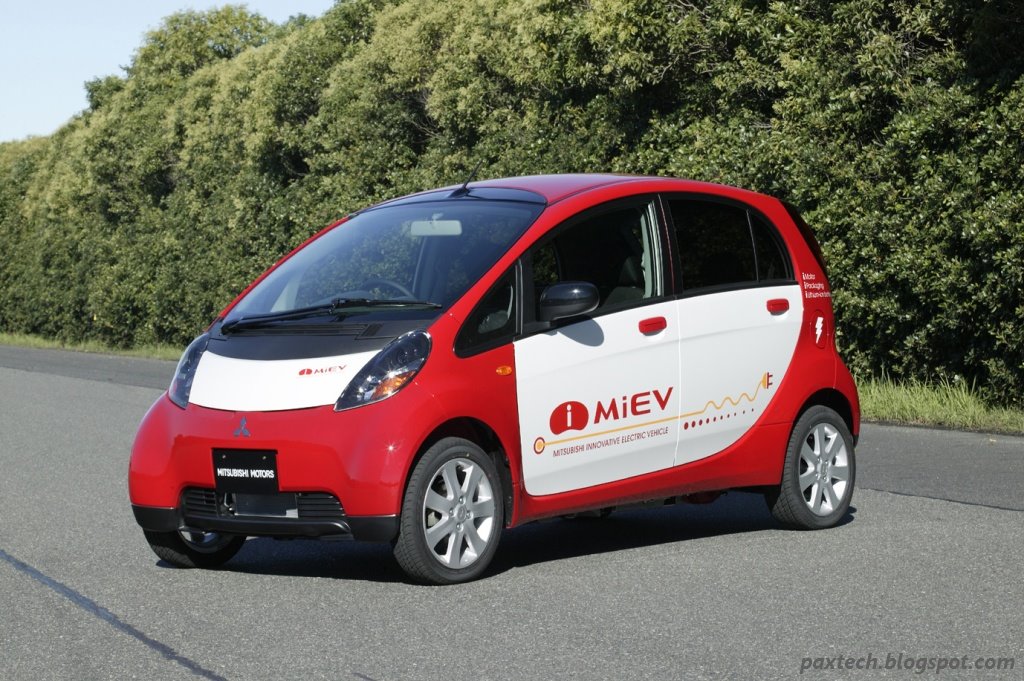
Based on the i-MiEV (Mitsubishi Innovative Electric Vehicle) city car, which is expected for sale in the UK in 2009, the i-MiEV SPORT showcases the sporty potential of the zero-emissions electric vehicle.

The car features Mitsubishi Motors' unique in-wheel motors in the front plus the company's vehicle dynamics control system - S-AWC (Super All Wheel Control) to achieve high manoeuvrability and environmental performance.

Like the i-MiEV, the i-MiEV SPORT uses a rear-midship design in its layout. Making use of the relatively long wheelbase of this platform, a high-capacity lithium-ion battery is installed in the lowest area under the floor, and components including a motor and inverter are arranged beneath the luggage compartment.

The aluminium space frame is light, rigid and strong; helping to improve performance by minimizing weight.

The powertrain system employs three permanent magnetic synchronous motors. One in-wheel motor is placed at each front wheel and a single motor drives the rear wheels, similar to the "i-MiEV" system. An E-4WD system electronically optimizes the output of all motors.

Energy-saving environmental innovations are seen throughout the i-MiEV SPORT. Effective use of energy is achieved by installing an auxiliary photovoltaic generator on the roof, a power-generating fan inside the front grill, and regenerative braking functions to recover energy when the car is slowing down. Much of the lighting is by bright, power-saving LEDs, included in the rear combination lamps and vehicle interior, and the efficiency of the air conditioning is enhanced by the use of heat-absorbing window glass.

In addition, Green Plastic — Mitsubishi Motors' unique plant-based resin technology — is used wherever possible for interior components.

i-MiEV SPORT Specifications:

Overall length: 3,450 mm
Overall width: 1,600 mm
Overall height: 1,400 mm
Wheelbase: 2,550 mm
Seating capacity: 2 + 2 people
Motor: Permanent magnet synchronous motor-style (front); single motor (rear)
Maximum output: Front: 20 kW × 2; rear: 47 kW
Maximum torque: Front: 250 Nm × 2; rear: 180 Nm
Maximum speed: 180km / h
Range (10 15) mode: 200km
Drive system: E-4WD
Tyre Size: 175/45R17


Mitsubishi Concept-cX
The Concept-cX will be shown as the new ‘baby Outlander’ combining over 70-years of four wheel drive experience with an innovative global environmental strategy. The Concept-cX, when launched, will be the showcase for the CO² friendly all-new Euro 5 Clean Diesel family of engines to be launched in 2009 as well a number of other green technologies.

The new engine is planned to have class-topping power output and Euro 5 emissions performance include a new high-efficiency turbocharger and high-efficiency combustion characteristics developed by Mitsubishi Heavy Industries and Mitsubishi Motors.

Sharp in design and in dynamics, Mitsubishi’s Concept-cX boasts an excellent environmental performance to be seen in the low fuel consumption and emission levels achieved by its 100 kW (136 ps) @ 4,000 rpm / 280 Nm @ 2,000 rpm next generation 1.8-litre Clean Diesel DOHC 16 valve 4 cylinder engine.

Amongst other technologies, it features a variable geometry (VG) turbocharger – to generate optimum boost pressure for all engine loads – as well as DPF (Diesel Particulate Filter) and DOC (Diesel Oxidation Catalyst). The 1.8 litre Clean Diesel engine is mated to Mitsubishi Motors’ Twin Clutch SST technology.

Concept-cX’s further green credentials include eco-friendly “Green Plastics”, MMC’s proprietary plant-based resin technology - made from bamboo and other plant-based resins, used for interior trim materials, such as floor mats, door trim, tail gate trim and seat back panels.

Its on-road abilities are further enhanced by the use of Mitsubishi’s sophisticated AWC (All Wheel Control) technology, similar in essence to the device successfully introduced with the new Outlander.
Concept-cX Specifications:

Overall length: 4,100 mm
Overall width: 1,750 mm
Overall Height: 1,550 mm
Wheelbase: 2,525 mm
Weight: 1,360 kg
Riding capacity: 5 / 7 people
Engine: 4-cylinder / 1,799 cc DOHC, 16-valves common rail with Solonoidal injector fuel system. “Clean Diesel” Euro 5 with Diesel Particulate Filter (DPF) and Diesel Oxidation Catalyst (DOC)
Turbo: Variable Geometry (VG) turbocharger
Maximum output: 100 kW (136 ps) @ 4,000 rpm
Maximum torque: 280 Nm @ 2,000 rpm
Maximum speed: 180km / h
Transmission: Electronically piloted All Wheel Control system with Twin Clutch-SST (Sports Shift Transmission)

Sunday, March 23, 2008

Mitsubishi Motors features mini cars at New York Int'l Auto Show


The Power of Small: Mitsubishi Motors Showcases Little Cars With Big Capabilities

March 18, 2008 -- NEW YORK --
The Mitsubishi Motors vehicles displayed at the 2008 New York International Auto Show will help North American consumers "get small" and get acquainted with Mitsubishi's renowned small car building capabilities. Tetsuro Aikawa, Managing Director In Charge of Product Development Group Headquarters, will introduce to the North American media the i, i MiEV, i MiEV Sport concept and Concept-cX minicars. The concept and production cars will raise awareness of the capability, sophistication, and design intelligence found in the Mitsubishi's minicar and compact vehicles.

Beyond the obvious advantages offered by smaller, lighter weight vehicles such as improved fuel economy, maneuverability, and reduced cost of ownership, the Mitsubishi models on display offer clever design features and capabilities traditionally associated with larger cars.

"i": To the third power
The increased congestion of urban environments, rising fuel prices, and the cumulative effects of exhaust emissions are all compelling arguments for smaller, more efficient personal transportation. The innovative design and layout of the award-winning "i" minicar showcases Mitsubishi's small car building prowess. Three "i" variants will appear at the Jacob K. Javits Convention Center, including the "i" (gasoline), the i MiEV (Mitsubishi Innovative Electric Vehicle), and the i MiEV Sport concept. The Mitsubishi Motors "i" family represents technological progress in capability and efficiency of the small car concept.
Mitsubishi "i"
"i": Style power
On sale in Japan since 2006, the innovative "i" minicar maximizes a kei-class* car footprint to combine a smoother ride; nimble handling, interior space to accommodate four adults, all wrapped in a unique, stylish package. The "i" is powered by an aluminum three-cylinder, 660cc turbocharged, gasoline engine. This premium minicar's unique rear midship layout locates the engine ahead of the rear axle and helps the vehicle overcome the challenges for interior space, ride comfort and handling typically associated with the minicar class. The optimized interior package long (2550mm or 100.4 inches) wheelbase yields class-leading comfort, handling, and ride quality. The exterior and interior designs offer a fresh take on the traditionally boxy minicar class.

The "i" proved so successful at conquering the challenges associated with small car design that it won several major awards including the RJC (Automotive Researchers and Journalist Conference) Car of the Year 2007, and the Good Design Grand Prize 2006 (awarded by the Japan Industrial Design Promotion Organization). While the RJC award focuses on the automotive industry, the Good Design Grand Prize has a 52-year tradition and screens entries from all fields of human activity based the view that design is an essential element in all fields of everyday life and industry. The "Good Design Award 2006" received 2,918 entries from April 26th to June 7th 2006.

*The kei-class is a popular small vehicle segment in Japan that is limited to a 660cc engine and a 3375mm (132.9 inches) long x 1475mm (58 inches) wide footprint. Vehicle taxation in Japan is related to elements such as engine displacement, vehicle size, and emissions; minicars offer owners tax advantages and reduced cost of ownership.

Mitsubishi i MiEV
i MiEV: Electric power
The i MiEV electric vehicle, in its first US show appearance, improves on the efficient rear mid-ship layout by adapting a zero-emissions state-of-the-art electric drivetrain to this small car package. A durable 330-volt lithium-ion battery system is located under the floor deck, powering a permanent magnet electric motor. With this packaging, the i MiEV is able to offer the same level of interior utility and space as the gasoline version while lowering the center of gravity for more stable handling. The 47 kW electric motor offers improved performance over the 64 hp gasoline version. With instantaneous electric power, the i MiEV offers quicker acceleration compared to the gasoline version. The battery, developed by the MMC joint venture company Lithium Energy Japan, represents the leading edge in battery technology, and promises up to 100 miles of driving on a single charge. The i MiEV will launch in Japan next year (2009), adding a no-pollution solution for congested city streets.

Mitsubishi i MiEV Sport
i MiEV Sport: Sports power
The i MiEV Sport concept, making its North American debut in New York, maximizes the sporty possibilities of the zero-emissions electric vehicle.

The i MiEV Sport concept is a coupe variation on the i MiEV with a "fastback" roofline with a strong performance bias, leveraging the electric vehicle's natural advantages for a performance payoff. The Sport is constructed using a rigid lightweight aluminum frame that helps improve performance and range. The rear mid-ship layout (like the i MiEV) optimizes interior space and ideally situates the drivetrain's electrical components to maximize handling. In the interest of improved on-road capability, the i MiEV Sport's powertrain utilizes multiple electric motors. Two 20 kW electric motors, one built into each front wheel, work together with a single, powerful 47 kW motor that drives the rear wheels. Power output, traction and braking at all four wheels are controlled by the S-AWC (Super All-Wheel Control) system which integrates the ABS and ASC (Active Stability Control) systems to provide outstanding control and handling. For this electric vehicle application, a new E-AYC (Electronic Active Yaw Control) produces the same torque vectoring characteristics as the Lancer Evolution's AYC to give the vehicle playful road manners while maximizing stability and control.

The advanced, futuristic i MiEV Sport concept is also environmentally thoughtful in function and design. While a light green pearlescent exterior evokes thoughts of nature, the heat-absorbing window glass improves the efficiency of the air conditioning and low-drain LEDs are used throughout the vehicle including the rear combination lamps and interior lighting. An auxiliary photovoltaic generator on the roof makes effective use of solar energy; turbines in the front grille harness wind power; regenerative brakes capture motive power. The interior styling is clean, simple and fluid, allowing the driver to feel at home in this sporty, zero-emissions electric vehicle.

Mitsubishi Concept-cX
Concept-cX
In addition the trio of "i" minicars, the Concept-cX will appear at the New York International Auto show.The Concept-cX showcases a forward-thinking small SUV design that offers high levels of road and environmental performance with a newly developed 1.8-liter clean diesel engine mated to a Twin Clutch SST (Sport Shift Transmission). With its high seat position providing a wider field of view and its split tailgate giving easy access to the luggage compartment, the Concept-cX offers enhanced safety, utility and convenience. The interior is a nod to the modern with a mix of black and white with warm brown leather accents. A clean, sophisticated IP allows the driver enjoyment in an appealing, comfortable environment. Energy-absorbing materials are used throughout the vehicle, including the lower bumper, to increase the ability to restore its form after minor collisions. The Mitsubishi Concept-cX is a small soft-roader for on-road use that combines a high level or utility, fuel economy and driver enjoyment.
New Additions to the Lancer Lineup - the Grown-up Compact Evolves

Also on display will be Mitsubishi's latest additions to the compact Lancer series, the high performance Lancer Evolution, the 2009 Lancer GTS 2.4 and the turbocharged Lancer Ralliart, showing how much fun can be squeezed into a smaller sedan. Building off the success of the redesigned 2008 Lancer, the 2009 Lancer GTS boasts a new 2.4L engine and combines a sport-tuned suspension with 18-inch wheels, 215/45 R18 tires and large 4-wheel disc brakes. Powered by a new 2.0-liter DOHC MIVEC intercooled and turbocharged engine that boosts an estimated 235 horsepower, the Lancer Ralliart offers a medium between the Lancer GTS and the Lancer Evolution. Set to arrive at dealerships in the summer of 2008, the Lancer Ralliart will also feature a Twin Clutch-SST gearbox and a full-time 4WD driveline with Active Center Differential (ACD).

Saturday, September 8, 2007

Mitsubishi Motors' lineup at the 40th Tokyo Motor Show

Mitsubishi Motors lineup at the 40th Tokyo Motor Show

Tokyo, September 7, 2007 — Mitsubishi Motors Corporation is proud to introduce three concept cars at the 40th Tokyo Motor Show. Each car is a different expression of the three pillars of Mitsubishi Motor's vehicle strategy: driving pleasure, reassuring safety and environmental responsibility. Held at Makuhari Messe, the 40th Tokyo Motor Show is open to the public from October 27 through November 11, with press and media days October 24, 25 and 26.

World Premiere: i MiEV SPORT


Based on the i MiEV,*1 the pinnacle of Mitsubishi Motors's environmental technology, the i MiEV SPORT maximizes the sporty possibilities of the zero-emissions electric vehicle. The high power and environmental performance of its electric motors make it an exhilarating drive that delivers superior environmental performance.
*1: MiEV: Mitsubishi innovative Electric Vehicle

World Premiere: MITSUBISHI Concept-ZT*2


The Concept-ZT showcases an advanced level of driving pleasure, safety and environmental responsibility — Mitsubishi Motor's vehicle strategy — wrapped in a realistic package. Under the hood, a newly developed fuel-efficient, 2.2-liter clean diesel engine is mated to the new Twin Clutch SST (Sport Shift Transmission). Concept-ZT also features advanced active safety as well as passive safety technology, such as its pop-up hood.
*2: ZT: "Z" meaning the ultimate, plus "T" for tourer

World Premiere: MITSUBISHI Concept-cX*3


Developed from Mitsubishi Motors' legendary SUV experience, the Concept-cX is a compact SUV with nimble running performance and utility on roads, as well as solid environmental performance.
*3: cX: "c" for compact, plus "X" for crossover

Wednesday, August 29, 2007

Mitsubishi Concept-cX in the flesh

Mitsubishi Concept-cX - Dual peace of mind -


Amsterdam, August 29th, 2007

Building upon seventy years of 4-Wheel-Drive expertise, Mitsubishi Motors Corporation (MMC) is in a privileged position to appreciate the customer benefits of this technology, both in terms of on-road active safety and off-road ability, from Lancer Evolution to Pajero.

In parallel, MMC is acutely aware of the pressing issues brought by climate change and is implementing a holistic environmental global strategy, through its “Environment Initiative Program 2010” (EiP 2010) umbrella program.

Combining these two “piece-of-mind” approaches, Mitsubishi Motors will introduce Concept-cX at the occasion of the 62nd Frankfurt Motor Show: a vibrant demonstration that driving pleasure and corporate responsibility are not mutually exclusive and the showcase for the CO² friendly all-new Euro 5 Clean Diesel family of engines, co-developed by MMC and Mitsubishi Heavy Industries Ltd. and to be launched in 2009.


Ingrained guiding principles
Mitsubishi Motors Corporation’s corporate citizenship and its concern over environmental issues is neither a recent phenomenon nor a quick marketing trick.

Indeed, they are deep-rooted in Mitsubishi’s corporate culture, as formalized in several guiding principles edicted in the 1930’s by Koyata Iwazaki (of the founding Iwazaki family) the fourth and last President of the old Mitsubishi organization:

1. Enrich society – both materially and spiritually – and safeguard the global environment.
2. Conduct business in the spirit of integrity and fairness and on a foundation of transparency and openness.
3. Adopt a global perspective in developing and expanding business.

A few decades later, these principles are very much alive and respected throughout the Mitsubishi group of companies.

The first of these principles was the trigger for MMC’s continued efforts in the area of environmentally-friendly technology, from the MCA (Mitsubishi Clean Air) engine technology of the 1970’s to today’s wide spectrum of solutions.

Since the 1993 Mitsubishi Motors Environmental Council, MMC has formalized its commitment to use its engineering expertise to contribute to a cleaner environment.

As a reminder, Mitsubishi Motors Corporation has adopted an all-embracing approach in addressing global environmental issues. Under its “EIP 2010” (“Environment Initiative Program 2010”) umbrella project, the Company is actively engaged in the development of a wide range of such technologies, covering:

1. Powertrains (see below)
2. Materials (plant-based “Green Plastic”,…),
3. Processes (“Design for Environment” guiding principles,…),
4. Manufacturing (pollution-prevention and recycling measures).
5. Conservation ("Pajero Forest & Local Mountain Restoration Initiative" aiming to conserve and cultivate Japan's forests and woodlands,…).

Europe = Next Generation Clean Diesel
Whilst pursuing long-term fundamental research & development, Mitsubishi Motors has taken a very down-to-earth view on marketable “green” technologies to make a bigger impact short term.

In particular, MMC has decided to go regional with powertrain solutions matching the everyday reality of very different regional needs, driving patterns & infrastructures:

1. Clean Diesel Euro 5 family of engines for Europe,
2. Next-generation electric vehicle for Japan,
3. Flexible fuel vehicle for Brazil,

Considering the overwhelming importance of Diesel in Europe (50+% of sales in average), the most effective short-term was to elect Diesel as the low CO² solution for this region, as opposed to fancier technologies, ultimately limited in impact by cost, sheer volume or recyclability.

There lies the strategic importance of MMC’s next generation of Euro 5 Clean Diesel engines. Developed jointly with Mitsubishi Heavy Industries Ltd., this new family powerplants is a key element in Mitsubishi Motors' efforts to lower CO² and other greenhouse gas emissions.

Features contributing to the new engine's class-topping power output and Euro 5 emissions performance include a new high-efficiency turbocharger and high-efficiency combustion characteristics that stem from the application of own analytic technology of Mitsubishi Heavy Industries and Mitsubishi Motors.


Consistent with its no-frills approach, MMC has taken the decision to bring forward to early 2009 the start of production of this family of engines to Europe, one full year earlier than scheduled (following the European introduction these powerplants will also be phased into other markets). This advancement will allow MMC to meet the needs of the growing number of environment-conscious customers quicker and make de facto a more substantial and short(er)-term impact.

Real World
In this context, Concept-cX represents a proposal for an accessible, affordable, sustainable and realistic solution to today’s pressing issues, whilst preserving authentic driving pleasure..

Case-in-point, Concept-cX follows the popular compact SUV route to carry this message right at the heart of the market, where SUVs are one of the fastest growing segments.

Sharp in design and in dynamics, Mitsubishi’s Concept-cX boasts an excellent environmental performance to be seen in the (targeted) low fuel consumption and emission levels achieved by its 100 kW (136 ps) @ 4,000 rpm / 280 Nm @ 2,000 rpm next generation 1.8-liter Clean Diesel DOHC 16 valve 4 cylinder engine. Amongst other technologies, it features a variable geometry (VG) turbocharger – to generate optimum boost pressure for all engine loads – as well as DPF (Diesel Particulate Filter) and DOC (Diesel Oxidation Catalyst).

For this concept car application, the 1.8 l Clean Diesel engine is mated to Mitsubishi Motors’ Twin Clutch SST technology. Recently announced, this automated manual transmission combines the economy and dynamic driving of a manual transmission with the convenience of an automatic gearbox. In essence:

1. High power transmission efficiency and low fuel consumption, on par with a conventional manual unit.
2. Slick, sporty gear changing with no clutch pedal.
3. Quick response and smooth shifting.


Concept-cX’s further green credentials include eco-friendly “Green Plastics”, MMC’s proprietary plant-based resin technology - made from bamboo and other plant-based resins - effectively used for interior trim materials, such as floor mats, door trim, tail gate trim and seat back panels.


On-road demand
Surfing on the popular compact SUV wave by strategy (up 54% from 325,000 in 2001 to 500,000 in 2006 and with further 35% growth expected between 2006 and 2009) and by heritage (from the 1936 PX33 to the 2007 Outlander, L200 and Pajero), Concept-cX does acknowledge the essentially on-road usage of these vehicles.

Trendy substitutes to more conventional formats such as MPVs, compact SUVs add a bit of shine to utility whilst fulfilling all the duties expected from compact family cars. Hence the split tailgate used by Outlander but also Concept-cX for instance.

Compact (410 cm), low (155 cm), wide (175 cm), sitting on a long wheelbase (252,5 cm) & wide tracks (151 cm/151 cm) and planted on its 225/45R19 tires, Concept-cX offers passenger car-like stance and dynamics, as suggested by its gaping Lancer “Jet Fighter” grille.

Its on-road abilities are further enhanced by the use of Mitsubishi’s sophisticated AWC (All Wheel Control) technology, similar in essence to the device successfully introduced with the new Outlander.

This electronically controlled 4WD system offers the driver a choice of three modes (2WD, 4WD Auto, 4WD Lock) to match traction control to his preferences or driving conditions. The center differential features an electronically controlled coupling that uses feed-forward control to determine the optimum front/rear torque split from sensor data on throttle opening, vehicle speed, road conditions and driver inputs.

Jet fighter
Featuring the “Jet Fighter” grille introduced with the all-new Lancer family and using a derivative of Outlander’s 4-Wheel-Drive drivetrain, Concept-cX does create an interesting link between Mitsubishi’s passenger cars and SUVs, an intention clearly visible in its exterior design.

Indeed, that SUV / hatchback crossover positioning is stressed through design features shared by both formats. However, Concept-cX incorporates a sports car flavour stronger than usually applied to this genre and very much consistent with Mitsubishi’s impeccable sporting heritage.

Wedge
The intention is evident when considering Concept-cX’s overall format: a tight and powerful wedge, slotted within 4 bulging wheel-arches, fronted by the vast expanse of a clam-shell hood and finishing with deep-set headlamps either sides of the reverse slant of an over-sized version of Mitsubishi’s trademark “Jet Fighter” grille.

The flanks themselves are all motion, with beltline, Lancer-like character line and even the position of the door handles following airflows.

At the back, all lines converge and merge into the wrap-around “fast hatch” tucked in between the powerful rear fenders, with the eyebrows of the (front) headlamps echoed by the (rear) roof spoiler and the lower vent / central exhaust reminding jets’ thrust nozzles.

Concept-cX also ticks the convenience box with its deep panoramic backlight, twin-stage split tailgate and high mounted rear combination lamps.

Finishing touch, Concept-cX sports a sharp & pure metallic medium blue hue that evokes the image of a crystal-clear lake, while the use of fine aluminium flecks throughout creates a nearly transparent metallic finish.

Open
Using MMC’s proprietary Green Plastic (floor mats, door trim, tail gate trim and seat back panels) and upholstered in earthy tones of brown (leather) and off-white, the interior bridges the gap between sporty and comfy, mixing driver-oriented round meters with bench seats and soft padding to create an interior space that cocoons the occupants, but remind them that they are in a car. Still…

Thinly padded but welcoming nonetheless, the organically-shaped front backrests are mated to a bench seat integrating the transmission lever (Twin Clutch SST and 2WD/4WD functions) as well as the starter and some of the warning lights (bonnet open, “fast hatch” open, low fuel).

The dashboard itself points to the underlying strength of the car’s frame and invite all occupants to share the voyage through a mega-sized information centre touch screen.

Specifications

* Dimensions:
o Length: 410 cm
o Width: 175 cm
o Height: 155 cm
o Wheelbase: 252.5 cm
o Tracks: 151 cm / 151 cm
o Weight: 1,360 kg
* Engine:
o 4 cylinders / 1,799 cc
o DOHC, 16 valves
o Common Rail & Selenoidal injector fuel system
o “Clean Diesel” Euro 5 w/ Diesel Particulate Filter (DPF) and Diesel Oxidation Catalyst (DOC)
o Variable geometry (VG) turbocharger
o 100 kW (136 ps) @ 4,000 rpm / 280 Nm @ 2,000 rpm

* Transmission:
o Electronically piloted All Wheel Control system
o Twin Clutch SST*


***

Note: “Pajero” is “Montero” in Spain and “Shogun” in the UK.

***

*Twin Clutch SST puts odd (1st, 3rd, 5th) and even (2nd, 4th and 6th) gears on separate input shafts, each connected to an individual clutch. With both clutches under precise system control, this arrangement allows lightening-fast, smooth and lag-free gear changes with no interruption in power delivery.

Using clutches instead of a torque converter to transmit power makes the Twin Clutch SST simpler in structure and reduces power transmission losses for higher transmission efficiency that leads to improved fuel mileage.

Twin Clutch SST allows the driver to switch between 3 shifting programs to cover the full range of driving situations:
a. Normal mode:
For normal driving situations, Normal mode scheduling uses relatively low-speed shift points to deliver unobtrusive shifting for maximum comfort together with optimum fuel economy.
b. Sport mode:
For more demanding driving or when engine braking is required, Sport mode scheduling uses higher shift points and quicker shifting to deliver instant throttle response.
c. S-Sport mode:
Compared with Sport mode, S-Sport mode scheduling keeps the engine turning at higher revs while allowing lightening-fast shifting.

-MMC

Mitsubishi Motors lineup at 2007 Frankfurt Motor Show

Mitsubishi Motors lineup at 2007 Frankfurt Motor Show

Tokyo, August 29, 2007 - Mitsubishi Motors Corporation and its European unit Mitsubishi Motors Europe B.V. will unveil the European market version of the new Lancer sports sedan at the 62nd Internationale Automobil Ausstellung (IAA; commonly known as the Frankfurt Motor Show). In addition to the Lancer, the Mitsubishi innovative Electric Vehicle (i MiEV*2 ) will be shown to the European public for the first time (press day only) and the MITSUBISHI Concept-cX*2 compact SUV will have its global unveiling. In total, 19 models (17 during press pre-viewing) will be on display. Held at the Frankfurt Messe Complex, the 2007 Frankfurt Motor Show will be open to the public from September 15 through 23, with press and media pre-viewing September 11 through 14.

Mitsubishi Concept-cX


New European Lancer sedan


The new Lancer sedan has already been launched in North America, Russia and Japan (Japan-market name: Galant Fortis) and has been well-received as a "global standard sporty sedan" that achieves the optimum balance between quality of ride, road performance, safety, environmental and comfort performance.

To meet European market requirements, three engines are available in the new Lancer: a new 1.8-liter DOHC MIVEC with aluminum cylinder block [max. output 105 kW (143 PS)]; a 2-liter turbocharged diesel [103 kW (140 PS)]; and a 1.5-liter DOHC MIVEC [80 kW (109PS)] unit.

The MITSUBISHI Concept-cX is a new-generation compact SUV that realizes the ideal balance between environmental and everyday practical performance. The concept car is powered by a new Euro 5 compliant high-output, high-efficiency 1.8-liter clean diesel engine mated to Mitsubishi's new Twin Clutch SST (Sport Shift Transmission) that delivers superior power transmission efficiency. This powertrain delivers zippy performance with excellent fuel economy and low emissions. Among the number of new environmental technologies applied in the Concept-cX is the extensive use of interior trim materials made from Mitsubishi's own Green Plastic - made from bamboo and other plant-based resins - part of an effort to stop global warming and slow the depletion of oil reserves.

The Mitsubishi Motors Frankfurt Motor Show press briefing is scheduled to start at 10 am on Tuesday September 11 and will be held at the company's stand.

*1 i-EV in Germany-market
*2 cX: compact crossover

1. New European Lancer sedan product features
- The packaging realizes generous living space with a body that is wider and taller but only slightly longer than the current model. The wider track realizes better stability.
- The exterior design creates a body with vibrant looks and a strong road presence using proportions comprising a large cabin wrapped in sporty, wide-stance styling and by combining the Mitsubishi Motors hallmark inverted-slant nose with a trapezoidal grille. The new Lancer is the first model to employ the new design identity that will mark Mitsubishi Motors sedans to be introduced in future.
- The following powertrain configurations are available: A new 1.8-liter DOHC MIVEC engine with aluminum cylinder block [max. output 105 kW (143 PS)] mated to either the INVECS-III 6-speed Sport Mode CVT or a 5-speed manual transmission; a 2-liter turbocharged diesel engine [103 kW (140 PS)] mated to a 6-speed manual transmission; and a 1.5-liter DOHC MIVEC engine [80 kW (109PS)] mated to a 4-speed manual or a 5-speed automatic transmission. All the powertrains deliver responsive power and excellent environmental performance. The high-rigidity platform, used on the Outlander and Delica D:5*3, delivers outstanding crashworthiness; a revamped suspension underpins and supports high levels of handling and response together with safety performance.
- Features enhancing passive and impact safety include: SRS airbags (driver and front passenger airbags, driver knee airbag, side and curtain airbags); adaptive front lighting (AFS) that improves the driver's field of vision at night; and rain-sensitive auto wipers.
- The European Lancer's utility and convenience specification includes a Rockford Fosgate premium sound system, giving superior sound reproduction, as well as with paddle shifters that allow the driver to change gear without taking his hand off the steering wheel. Standard on all models is Mitsubishi Motors Cocochi interior that includes a pollen-removing air filter in its occupant-friendly specification.

*3 Only available in Japan

2. MITSUBISHI Concept-cX product features
- The MITSUBISHI Concept-cX is a compact car that creates a new SUV/sports hatchback crossover category; a crossover that stirs a sense of adventure to "cut a swathe" through the hustle and bustle of urban life. The design gives the exterior a purposeful and functional form using a dynamic wedge shape and large tires. The front visage combines the inverted-slant nose with trapezoidal grille that defines the new Mitsubishi Motors design identity and tailors this to the car's crossover pedigree to project an appearance that is aggressive and powerful. The interior uses a modern and sporty design that engenders a sense of expectation about the car's performance and melds this with a high level of comfort. By visually accenting the strength of the underlying frame structure and through the contrasting use of soft padding, the design creates an interior space that wraps its occupants in a protective and comfortable cocoon.
- The concept car uses a new high-output, high-efficiency 1.8-liter clean diesel engine, featuring a variable geometry (VG) turbocharger for optimum boost control and a diesel oxidation catalyst (DOC) with diesel particulate filter (DPF) in the exhaust system for compliance with Europe's Euro 5 emission standards. The power unit is mated to Mitsubishi's new Twin Clutch SST (Sport Shift Transmission) which delivers superior power transmission efficiency in a powertrain that realizes zippy performance with excellent fuel economy and low emissions.
- MITSUBISHI Concept-cX employs interior trim materials made from Mitsubishi's own Green Plastic - made from plant-based resins - in a step to stop global warming and slow the depletion of oil reserves.
- In its packaging MITSUBISHI Concept-cX 's 4100 mm compact body makes for easy maneuverability around town and the high driving position improves visibility and brings the easy drivability expected of a SUV. Utility is enhanced with the split tailgate already well received on the Outlander for the way it facilitates loading and unloading of luggage. In the performance department, Concept-cX also uses Mitsubishi's electronically-controlled 4WD system and large 225/45R19 tires to deliver outstanding handling performance and stability both on tarmac and off-road.

Photo Sharing and Video Hosting at Photobucket

-MMC

Tuesday, July 31, 2007

Mitsubishi Concept-cX

Mitsubishi Motors Europe @ 2007 Frankfurt Motor Show
Amsterdam, July 30th, 2007

Preview # 4: Mitsubishi Concept-cX
- Dual peace of mind -


Building upon 70 years of four-wheel drive expertise, Mitsubishi Motors Corporation (MMC) is in a privileged position to appreciate the customer benefits of this technology, in terms of on-road active safety and off-road ability, from Lancer Evolution to Pajero.


At the occasion of the 62nd Frankfurt Motor Show, MMC will combine this dynamic fluency with the first tangible demonstration in Europe of its regionalised environmental strategy, previewing the CO2-friendly next generation Euro 5 Clean Diesel family of engines co-developed with its parent company, Mitsubishi Heavy Industries Ltd.

As a showcase for this dual “peace of mind”, Mitsubishi Motors will unveil Mitsubishi Concept-cX* in Frankfurt: an accessible, affordable, sustainable and realistic solution to today’s pressing issues. Sporty and flexible, Mitsubishi Concept-cX will follow the popular compact SUV route to carry this message right at the heart of the market.


Featuring the “Jet Fighter” grille already seen with Lancer Sports Sedan and using a soft-road application of the Outlander-derived Electric control four-wheel drive drivetrain, the 4.10m long Mitsubishi Concept-cX will also intend to create a link between Mitsubishi’s passenger cars and SUVs.

Sharp in design and in dynamics, Mitsubishi Concept-cX will boast an excellent environmental performance to be seen in the low fuel consumption and emission levels achieved by its next generation 1.8-litre Clean Diesel engine, mated to an automated manual transmission. A preview of a family of powertrains to be launched in the course of 2009, it features a variable geometry diffuser (VG) turbocharger – to generate optimum boost pressure for all engine loads – and DPF technologies.

Mitsubishi Concept-cX’s further green credentials include eco-friendly “Green Plastics”, MMC’s proprietary plant-based resin technology, effectively used for interior trim materials.

As a reminder, Mitsubishi Motors Corporation has adopted an all-embracing approach in addressing global environmental issues. Under its “EIP 2010” (“Environment Initiative Program 2010”) umbrella project, the Company is actively engaged in the development of a wide range of such technologies, covering:

o Powertrains suiting regional needs, driving patterns & infrastructures:
+ Clean Diesel Euro 5 family of engines for Europe
+ MiEV next-generation electric vehicle for Japan
+ Flexible fuel vehicle for Brazil
o Materials (plant-based “Green Plastic”,…)
o Processes (“Design for Environment” guiding principles,…).
o Manufacturing (pollution-prevention and recycling measures).
o Conservation (“Pajero Forest & Local Mountain Restoration Initiative” aiming to conserve and cultivate Japan’s forests and woodlands).

Note: “Pajero” is “Montero” in Spain and “Shogun” in the UK.
* ‘Compact crossover’ concept vehicle

-MMC